Twenty thousand kilometres sets a rhythm, not a specification
Reports on 17 August 2026 carried a figure that matters to anyone selling into Chinese pipeline construction: the 15th Five-Year plan for the new energy system sets a target of 20,000 km of new oil and gas pipeline, continuing the build-out of a single national network. The same reporting noted that PipeChina had said in May 2026 that nearly 40 major oil and gas pipeline projects were under construction, with a combined length above 9,000 km.
Two numbers, one conclusion: the order book exists. Neither number tells you what to make, because kilometre counts say nothing about diameter, pressure class or grade. Reading the figure as a demand forecast for a particular fitting family is the mistake this note is written to avoid.
What the figures support
| Item | Figure | Usable for |
|---|---|---|
| Planned new pipeline length, 15th Five-Year period | 20,000 km | Sizing the market, sequencing supply capacity |
| Major projects under construction (reported May 2026) | Nearly 40 | Judging where demand sits right now |
| Combined length under construction | Above 9,000 km | Cross-checking the pace against the plan |
The design basis for these lines is GB/T 34275-2024, the pressure piping code for transmission pipelines, issued and effective on 31 December 2024. That is the document that governs how a line is engineered, and therefore the document from which fitting requirements ultimately follow.
What the figures do not support
They do not give a diameter, a pressure class, a grade or a tonnage. A kilometre of 1,000 mm line at one pressure class and a kilometre of 400 mm line at another are not the same quantity of steel, and the difference in fitting content is larger still, because fitting count scales with station count and tie-ins rather than with route length.
They also do not identify which lines will be built. The reporting refers to a plan; plans are implemented project by project, and the project list, the schedule and the specifications are published separately, if at all. A supplier who builds capacity against the plan and a specification book against the plan will be wrong about the specification book.
Where the demand actually lands
Three places, in rough order of fitting intensity. Compressor and pump stations, where the fitting population is dense, the pressure classes are highest and the inspection requirements are strictest. Tie-ins, where a new line joins the operating network and the fittings have to match two vintages of specification. And the line itself, which consumes mostly bends — induction bends and cold field bends — rather than catalogue elbows.
That last distinction has commercial consequences. A line build-out of this scale consumes far more bends than elbows, and the two are specified differently: a bend is defined by a centreline radius given on the drawing, an elbow by a catalogue radius family. A supplier whose capacity is in elbows and whose inquiry book is full of bends is in the wrong part of the market, whatever the kilometre count says.
What a supplier should do with the number
- Treat 20,000 km as a planning input for capacity and manpower, not as a demand forecast by product.
- Track the project list, not the plan: individual lines publish specifications, and specifications are what orders are written against.
- Watch the split between new-build transmission, station upgrades and city distribution, because the fitting families differ.
- Keep the design code edition in the quotation, since a project that straddles an edition change will need the one its contract names.
The figure is real and the demand is real. The specification is not in the figure, and pretending otherwise is how a supplier ends up quoting the right tonnage of the wrong product.
- Line pipe and fittings: butt-welding fittings
- Bends: pipe bends
- Send the project specifications: inquiry
Sources
Need a quote for the products mentioned in this article?
Submit your specs and our pressure piping team will respond within one business day.
Send RFQQuote in 4 hours
Products covered in this article
Sourcing any of these? Send the spec and our pressure-piping desk replies within 4 business hours.
 Pipe Bend
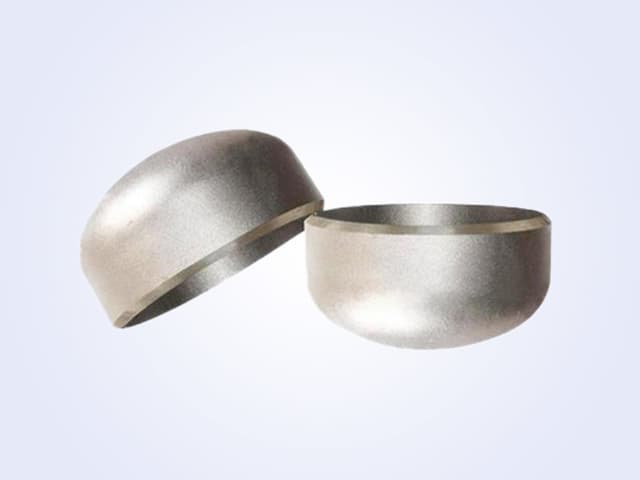
 Elbow
ASTM A234 WPB/WPC/WP11/WP22/WP91, ASTM A420 WPL6/WPL3, ASTM A403 WP304/WP316L, MSS SP-75 / ASTM A860 WPHY-52/60/65/70
 Elbow
Related reading
 Industry news
Manatee Gas FID in Trinidad and Tobago: A Source-Checked LNG Feedgas Update
Shell's July 2024 FID for the Manatee gas development in Trinidad and Tobago signals continued investment in LNG feedgas. This update outlines what is verified, what remains to be checked, and how EPC buyers can align procurement with evolving project timelines.
 Industry news
Hammerhead FID: Guyana's Seventh Offshore Development in the Official Record
ExxonMobil has taken FID on the Hammerhead project offshore Guyana, the seventh development on the Stabroek block. With a capacity of 150,000 bopd and a $6.8 billion investment, production is expected in 2029. This article outlines the key facts and procurement implications for piping suppliers.
 Industry news
Uaru Approval and the Fifth Stabroek FPSO Development: Official Facts for Buyers
ExxonMobil's Uaru project, the fifth Stabroek development, received final investment decision in April 2023. This article provides verified facts for procurement and engineering professionals, including capacity, investment, and timeline, with guidance on what to verify.