Why this matters
Duplex stainless steels have become the default choice for offshore topside piping, FPSO seawater systems and many chemical process services. The two grades that account for the bulk of demand are Duplex 2205 (UNS S31803 / S32205) and Super Duplex 2507 (UNS S32750), often quoted in the same enquiry. Picking 2205 when 2507 is needed leads to pitting failures; picking 2507 when 2205 would suffice doubles the alloy bill.
This guide gives the verified numbers and a clear decision rule.
Key technical facts
| Property | Duplex 2205 | Super Duplex 2507 |
|---|---|---|
| UNS | S31803 / S32205 | S32750 |
| Typical Cr | Approx. 22% | Approx. 25% |
| Typical Mo | Approx. 3% | Approx. 3.5-4% |
| Typical Ni | Approx. 5-6% | Approx. 6-8% |
| Typical N | Approx. 0.14-0.20% | Approx. 0.24-0.32% |
| Typical PREN | Approx. 35 | Approx. 42 or higher |
| Critical pitting temperature in seawater | Approx. 25-35 degC | Up to about 50 degC |
PREN is calculated as %Cr + 3.3 x %Mo + 16 x %N. A PREN above 40 is generally taken as the entry threshold for "super duplex."
Decision matrix
| Service | Recommended grade | Reasoning |
|---|---|---|
| Cooling water with chloride below 200 ppm | Duplex 2205 | Sufficient PREN, lower cost |
| Process piping with moderate chloride, ambient | Duplex 2205 | Standard offshore topside choice |
| Hot seawater (above 35-40 degC), chlorinated | Super Duplex 2507 | 2205 outside its CPT envelope |
| FPSO firewater, deluge | Super Duplex 2507 | Long-term pitting resistance |
| Sour gas, moderate H2S partial pressure | Duplex 2205 (with NACE MR0175 review) | Acceptable up to defined limits |
| Sour gas, severe H2S, high chloride | Super Duplex 2507 or CRA | 2205 may fall outside MR0175 limits |
Both grades are addressed in NACE MR0175 / ISO 15156 with environment-dependent limits; the standard does not give blanket clearance. Always run the MR0175 envelope check for your specific H2S partial pressure, chloride level, temperature and pH.
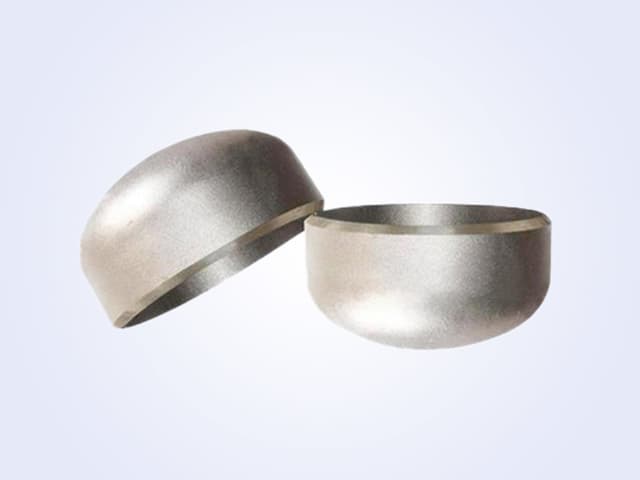
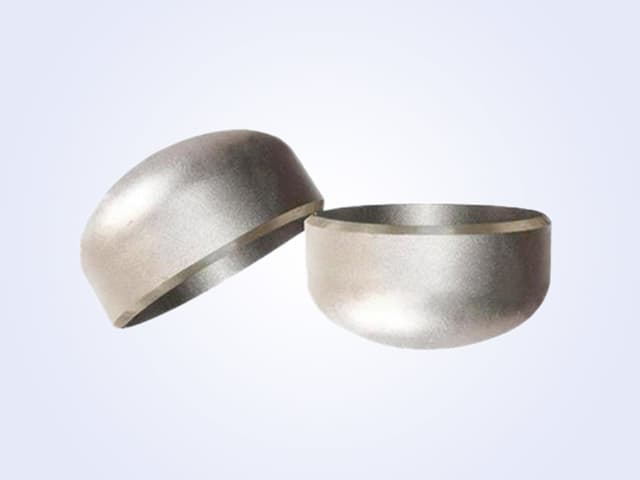
For seamless butt-welding pipe fittings and pipe bends in duplex and super-duplex grades, solution annealing followed by water quench is the standard heat treatment to maintain the austenite-ferrite balance close to 50/50.
Common procurement mistakes
- Using PREN as the only acceptance criterion. Phase balance, intermetallic content and ferrite measurement are equally important.
- Skipping ASTM A923 testing. Method B (Charpy) and Method C (corrosion test) are the practical screening tools for harmful intermetallic phases.
- Welding without nitrogen-augmented backing gas. Nitrogen loss in the weld root depresses PREN and breaks the phase balance.
- Specifying 2507 chemistry but accepting 2205 fittings as "upgrade." Always trace the UNS number on every piece.
- Mixing 2205 and 2507 in the same line without dissimilar weld qualification.
Buyer checklist
- Calculate the actual PREN from MTC chemistry, not from a typical value.
- Require ASTM A923 Method B (Charpy) or Method C (corrosion) testing per heat or per lot.
- Specify ferrite content range (typically 35-55%) on the MTC.
- For forged flanges cross-check that the forging route includes solution anneal plus water quench.
- Request our certificates page for ISO 9001, PED 2014/68/EU and material approval records.
- Send your duplex enquiry through our inquiry page with chloride, temperature and H2S data.
Sources
- https://ssmalloys.com/duplex-2205-vs-super-duplex-2507/
- https://sunhyings.com/blog/duplex-2205-vs-super-duplex-2507/
- https://www.xtd-ss.com/blog/duplex-vs-super-duplex-stainless-steel/
Need a quote for the products mentioned in this article?
Submit your specs and our pressure piping team will respond within one business day.
Send RFQQuote in 4 hours
Products covered in this article
Sourcing any of these? Send the spec and our pressure-piping desk replies within 4 business hours.
Related reading
 Technical
Flange Facing and Gasket Compatibility Checklist
ASME publishes separate standards for metallic and nonmetallic gaskets. This checklist helps buyers cross-check gasket type, flange facing, and procurement details before issuing an RFQ.
 Technical
ASME B16.21 Nonmetallic Flat Gasket Selection Guide
ASME B16.21 defines nonmetallic flat gaskets for pipe flanges. This guide explains the standard's scope, why you must pair it with the mating flange standard, and what to verify during procurement to avoid misapplication.
TechnicalASME B16.20 Metallic Gasket Selection for Flanged Joints
Learn how to select ASME B16.20 metallic gaskets for pipe flanges, verify compatibility with ASME B16.5 flanges, and avoid procurement pitfalls.