Why the MTC Matters More Than the Quote
Two suppliers can offer the same A234 WPB elbow at the same price. One supplies it with a vague "test report" stamped by the workshop foreman. The other supplies it with a properly issued EN 10204 type 3.1 certificate cross-referenced to a specific heat number on the part.
When the elbow fails in service, the second supplier has a defensible paper trail. The first does not — and the buyer carries the liability. The MTC is your insurance policy, and EN 10204 is the international rulebook for what a valid MTC looks like.
The Four EN 10204 Certificate Types
| Type | Name | What it proves | Inspector | Heat traceability |
|---|---|---|---|---|
| 2.1 | Declaration of compliance | Material complies with the order | None | None |
| 2.2 | Test report (non-specific) | Material tested per the order, but results may be from a different heat | None | Broken |
| 3.1 | Inspection certificate (specific) | Test results from the actual supplied batch, signed by manufacturer's QA representative who is organizationally independent of the manufacturing department | Manufacturer's QA dept (independent) | Maintained — heat-number specific |
| 3.2 | Inspection certificate (countersigned) | Same as 3.1 + countersigned by an independent inspector (third party or buyer's representative) who witnessed the tests | Independent body (SGS, BV, Lloyd's, TÜV, DNV) | Maintained — witnessed |
Type 2.1 — when to use
Decorative or non-critical components only. Never accept for pressure-bearing parts.
Type 2.2 — never accept for fittings or flanges
Type 2.2 explicitly allows the test data to come from a different heat than the one you received. Heat traceability is broken. Useless for any safety-critical part.
Type 3.1 — the default for B2B fittings
This is what 90 % of EPC procurement specifications call for. Two non-negotiable requirements:
- The QA representative who signs must be organizationally independent of the manufacturing department
- The test data must be from the actual heat that the marked component was made from
Type 3.2 — when 3.1 is not enough
When you need a third party (typically the buyer's own inspector or an independent body like SGS, BV, Lloyd's, TÜV, or DNV) to witness the tests, the certificate is countersigned and becomes type 3.2.
What a Compliant 3.1 Must Contain (Buyer Checklist)
Before paying for the lot, verify the certificate has every one of:
- [ ] Heat / lot / batch number — must be traceable to the physical fitting marking (cross-check the hard stamp on the part)
- [ ] Chemical composition — full element list: C, Mn, P, S, Si, Cr, Mo, Ni, Cu, V, Nb, Ti + Carbon Equivalent (CEV)
- [ ] Mechanical properties — tensile strength (Rm), yield strength (Rp0.2), elongation %, hardness (HRB / HBW / HV)
- [ ] Charpy V-notch impact values if low-temperature service applies (test temperature, 3 specimen energies, lateral expansion)
- [ ] NDT results referenced in the body (UT / RT report numbers)
- [ ] Heat treatment record (normalising / quench-temper / solution annealing details)
- [ ] Signature + stamp of authorised QA representative (with name and title) + date
- [ ] EN 10204 type designation explicitly written (e.g. "EN 10204:2004 type 3.1")
Pipe Fittings Special Rule: the "Mother Material" MTC
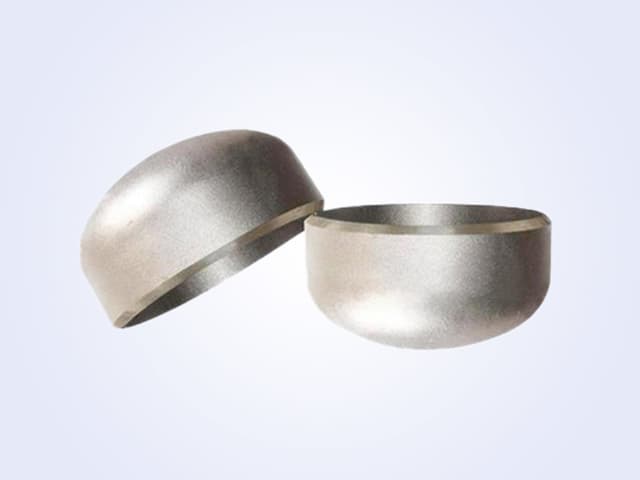
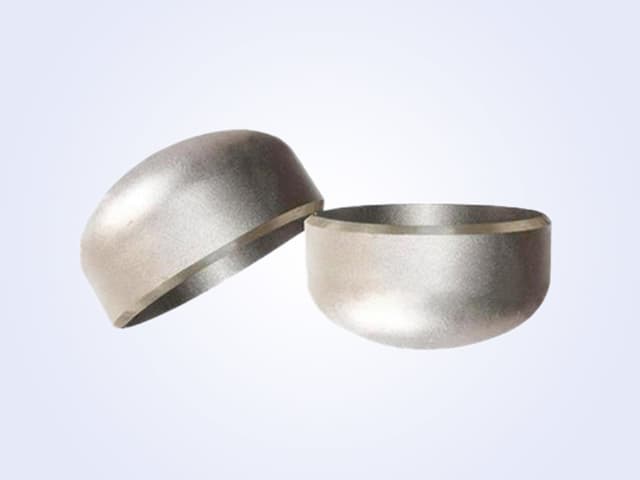
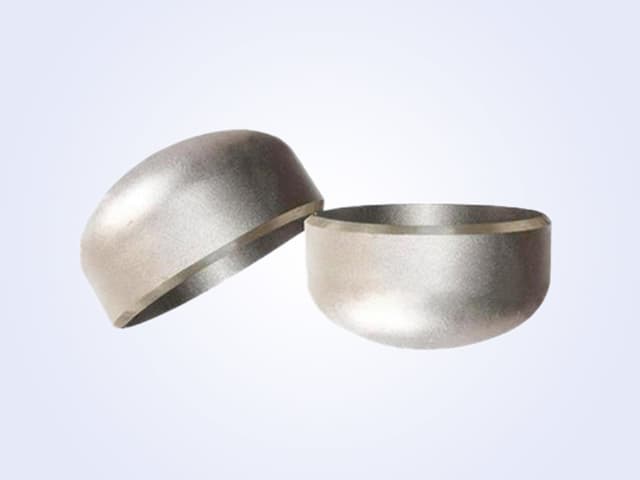
For elbows, tees, reducers, caps and other processed products, the manufacturer must supply MTCs for:
- The finished fitting itself
- The mother pipe / plate used to fabricate it
The two certificates are linked by heat number. The fitting MTC must reference the mother-material MTC's heat number.
How to cross-check on the inspection floor:
- Fitting body hard-stamp shows heat number "ABC123"
- Finished-fitting MTC heat number = ABC123 ✓
- Finished-fitting MTC references "made from heat ABC123 of mother material to ASTM A106 Gr B"
- Mother-pipe MTC for heat ABC123 attached separately ✓
If the mother-material MTC is missing, the chain is broken — reject the lot.
When 3.1 Is Enough vs When You Must Specify 3.2
| Service condition | MTC type required |
|---|---|
| ASME B31.3 process piping, normal Class 150-600 | 3.1 |
| ASME B31.1 power piping, normal grades | 3.1 |
| PED Categories I-III | 3.1 minimum |
| PED Category IV (high-pressure / hazardous fluid) | 3.2 typically required by the Notified Body |
| Subsea, sour service (NACE MR0175), nuclear, cryogenic, aerospace | Always specify 3.2 |
| Refinery FCC catalyst service | 3.2 |
| Critical-loop offshore oil & gas | 3.2 |
Red Flags When Reviewing a Chinese Supplier's MTC
- Heat number on certificate doesn't match the fitting hard-stamp — fundamental traceability break
- Type "3.1" issued under the logo of an inspection body (3.1 is by the manufacturer, not a third party — wrong format; if a third party is involved, the cert should be 3.2)
- Missing CEV value on a low-temperature carbon steel grade
- Sour-service order missing SSC / HIC results per NACE MR0175 / TM0284
- Photocopy / scan only — no controlled original with embossed stamp; for critical orders demand the original or a watermarked digital with verifiable signature
- Signature is the production manager's — that violates the "organizationally independent" requirement
- NDT report references a date AFTER the certificate issue date — impossible
How to Write the MTC Requirement Into Your PO
Sample clauses you can copy:
Clause A — General
"All fittings and flanges shall be supplied with EN 10204:2004 type 3.1 mill test certificates as a minimum. Certificates shall be heat-number-specific, traceable to the physical hard-stamp on the part body, and signed by the manufacturer's QA representative who shall be organizationally independent of the manufacturing department."
Clause B — Critical service (sour / cryogenic / PED IV)
"Items marked with [code: SS / CR / PED-IV] in the BOM shall be supplied with EN 10204:2004 type 3.2 mill test certificates countersigned by [SGS / BV / TÜV / DNV] following witness of all required mechanical, chemical, and NDT testing per the project specification."
Clause C — Mother material
"For all processed fittings (elbows, tees, reducers, caps), the supplier shall provide both the finished-fitting MTC and the mother-material MTC, cross-referenced by heat number. Failure to provide both shall be grounds for rejection."
This article is provided as a procurement reference. Project specifications must follow the latest EN 10204 edition (currently 2004) and any project-specific overrides.
Related Products
For physical supply of the specs discussed above, refer to the relevant Hebei Haihao product categories:
Or browse the full product catalogue and filter by ASTM / ASME / EN / GB standards, material grades, and size ranges.
Further Reading
Next Steps
- This article is a procurement reference; all standard numbers, chemistry limits, and process parameters defer to the latest published edition
- For project RFQs, submit your specs via the inquiry form; we respond within 4 business hours
- Factory certifications and inspection capability are listed on the certificates page
Need a quote for the products mentioned in this article?
Submit your specs and our pressure piping team will respond within one business day.
Send RFQQuote in 4 hours
Products covered in this article
Sourcing any of these? Send the spec and our pressure-piping desk replies within 4 business hours.
Related reading
 Buyer guide
Orifice Flange RFQ Checklist: B16.36 Details Buyers Often Miss
ASME B16.36 orifice flanges have unique requirements beyond B16.5. This guide covers scope, procurement checks, inspection points, and common risks to help EPC engineers and buyers specify correctly.
 Buyer guide
Hydrogen Piping Components: What an ASME B31.12 RFQ Must Define
ASME B31.12 governs hydrogen piping and pipelines. This guide explains what EPC engineers and procurement managers must specify in an RFQ for seamless pipes and socket-weld forged fittings, covering code parts, material verification, and inspection requirements.
 Buyer guide
Buttweld Spool Fit-Up: Coordinating ASME B16.9 Fittings and B16.25 Ends
Learn how to coordinate ASME B16.9 fittings with B16.25 bevel ends for reliable buttweld spool fit-up. Includes procurement checks, inspection points, and common risks.