Introduction
The pipe fitting industry is evolving rapidly, driven by technological advancements, environmental regulations, and shifting market demands. For procurement engineers and industrial buyers, understanding these trends is essential to evaluate suppliers effectively and secure reliable, cost-efficient products. This guide translates the key developments in pipe fitting manufacturing—3D printing, sustainability, smart manufacturing, and global competition—into practical procurement considerations. Use it to refine your supplier evaluation criteria and ensure your supply chain is ready for 2025 and beyond.
Additive Manufacturing: Is 3D Printing Ready for Critical Piping?
3D printing (additive manufacturing) has moved beyond prototyping into production, especially for complex or custom pipe fittings. While it offers rapid turnaround and design flexibility, not all 3D-printed fittings meet the mechanical and pressure requirements of industrial applications.
What to confirm with suppliers:
- Material certification (e.g., ASTM/ASME equivalents for printed alloys)
- Post-processing methods (heat treatment, surface finishing)
- Weldability and compatibility with existing piping systems
- Quality inspection reports (e.g., dimensional accuracy, density, tensile strength)
For critical services (high pressure, high temperature, corrosive media), traditional forged or wrought fittings remain preferred. Reserve 3D-printed fittings for non-critical, low-volume, or urgent replacements.
Sustainability as a Supplier Differentiator
Environmental regulations and corporate ESG goals are pushing manufacturers to adopt greener processes. Expect more suppliers to offer fittings made from recycled materials or with lower carbon footprints. However, not all “green” claims are created equal.
Procurement checklist for sustainable pipe fittings:
- Ask for Environmental Product Declarations (EPDs) if available.
- Verify recycled content percentage and whether it meets your project specifications.
- Confirm that the supplier complies with local emissions and waste disposal regulations.
- Evaluate the supplier’s energy sources and manufacturing efficiency (e.g., ISO 50001).
While sustainability is important, never compromise on material strength, pressure rating, or dimensional tolerances. Always request material test reports (MTRs) and third-party certifications.
Smart Manufacturing and Quality Assurance
Industry 4.0 technologies—IoT sensors, real-time monitoring, and AI-driven quality control—are becoming standard in modern pipe fitting factories. These systems improve traceability, reduce defects, and enable faster response to production issues.
How to assess a supplier’s smart manufacturing capabilities:
- Do they offer digital twins or simulation of complex bends?
- Can they provide real-time production status or quality data for your orders?
- Are inspection records (NDT, PMI, hydrostatic tests) digitized and easily accessible?
- How do they handle deviation and corrective actions?
For high-stakes projects, prioritize suppliers with automated inspection and full traceability from raw material to final fitting. This reduces the risk of receiving out-of-spec or counterfeit products.
Global Competition: Evaluating Suppliers for Long-Term Partnerships
Intense global competition means buyers have more choices, but also more risks—especially with low-cost suppliers who may cut corners. A future-ready supplier should demonstrate:
- Consistent adherence to international standards (ASME B16.9, B16.5, B16.25 for butt-weld fittings; ASTM A105, A182 for material)
- Robust quality management system (ISO 9001, PED, or IBR as required)
- Stable lead times and transparent communication
- Willingness to share detailed inspection documents and test results
Red flags to watch:
- Inability to provide full MTRs for each heat number
- Vague answers about heat treatment or welding procedures
- No third-party inspection reports (e.g., from SGS, Bureau Veritas)
- Prices significantly below market average without clear explanation
Practical Procurement Checklist for Future-Ready Pipe Fittings
When requesting a quotation for butt-weld fittings, flanges, or pipe bends, include the following to ensure accurate and competitive pricing:
- Material grade and standard (e.g., ASTM A234 WPB for carbon steel, A403 WP304 for stainless)
- Size and schedule (e.g., 4" Sch 40, 90° LR elbow)
- Quantity and packaging requirements
- Required certifications (MTR, NACE, PMI, etc.)
- Delivery timeline and destination
- Specific inspection or testing requirements (hydrostatic, radiography, etc.)
- Any special surface treatment (e.g., galvanizing, epoxy coating)
A detailed RFQ helps suppliers provide precise quotes and reduces the chance of misunderstandings later.
Conclusion
The future of pipe fitting manufacturing is shaped by innovation and sustainability. As a procurement professional, your role is to filter through the hype and identify suppliers who balance advanced capabilities with proven reliability. By focusing on standards compliance, transparent quality documentation, and practical supplier evaluation, you can build a resilient supply chain for your next project.
Ready to source high-quality pipe fittings with full traceability? Contact Hebei Haihao Group for a quotation. We manufacture butt-weld fittings, forged flanges, and custom bends to ASME, DIN, and ISO standards, with complete material certification and third-party inspection support.
Need a quote for the products mentioned in this article?
Submit your specs and our pressure piping team will respond within one business day.
Send RFQQuote in 4 hours
Products covered in this article
Sourcing any of these? Send the spec and our pressure-piping desk replies within 4 business hours.
 Elbow
ElbowASTM A234 WPB/WPC/WP11/WP22/WP91, ASTM A420 WPL6/WPL3, ASTM A403 WP304/WP316L, MSS SP-75 / ASTM A860 WPHY-52/60/65/70
 Elbow
Elbow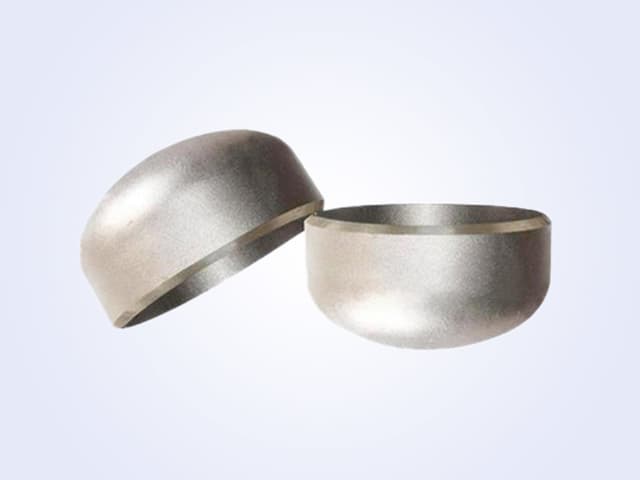 Elbow
ElbowRelated reading
 Buyer guide
NPT Threaded Fitting Inspection: B1.20.1 Gauging and RFQ Controls
Learn how to inspect NPT threaded fittings per ASME B1.20.1 and B16.11, including gauging, RFQ inputs, and documentation checks for EPC buyers.
 Buyer guide
ASME B31.1 Replacement Piping Spools: A Component Specification Guide
Specifying replacement piping spools for power plants requires careful alignment with ASME B31.1 and B16.9. This guide covers key procurement checks, RFQ inputs, and inspection points to ensure code compliance and safe operation.
 Buyer guide
Orifice Flange RFQ Checklist: B16.36 Details Buyers Often Miss
ASME B16.36 orifice flanges have unique requirements beyond B16.5. This guide covers scope, procurement checks, inspection points, and common risks to help EPC engineers and buyers specify correctly.