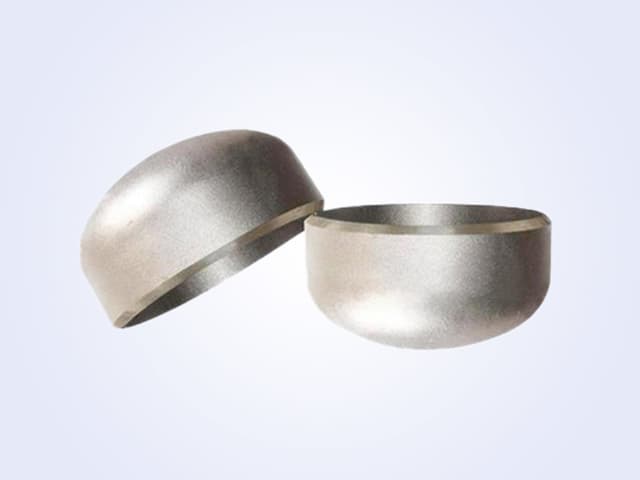
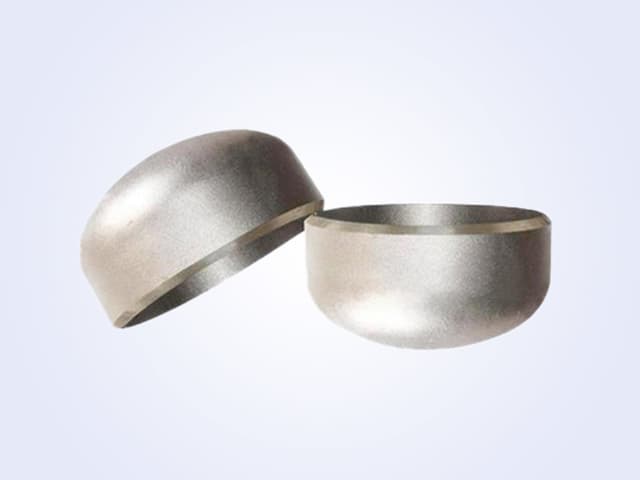
Forged pipe fittings, as metal pipe connectors processed through forging, have numerous significant advantages that make them widely used in industrial fields.
Forged pipe fittings excel in mechanical properties. Their internal structure is dense, free from inclusions, resulting in high strength, high hardness, and excellent toughness. This superior mechanical performance enables forged pipe fittings to withstand loads under high pressure, high temperature, and complex working conditions, maintaining structural integrity and stability, thereby meeting various industrial needs.
Forged pipe fittings have high precision and good dimensional consistency. Through precise forging and machining processes, accurate dimensions such as inner and outer diameters, wall thickness, and length are achieved, ensuring tight and secure connections with other components. This high precision allows forged pipe fittings to perform excellently in piping systems, reducing leaks and failures caused by dimensional deviations.
Forged pipe fittings also exhibit excellent sealing performance. Their internal grains are tightly bonded, free from capillary cracks and voids, effectively preventing air or oil leakage. This good sealing performance is crucial for the safe operation of piping systems and preventing water leakage, ensuring system stability and safety.
In addition to the above advantages, forged pipe fittings have high corrosion resistance and long service life. They are typically made of high-strength corrosion-resistant materials such as stainless steel, enabling them to resist corrosion and oxidation, thus extending their service life. Meanwhile, their excellent mechanical properties and sealing performance further enhance their durability and reliability.
In summary, forged pipe fittings play an important role in industrial fields due to their advantages of high strength, high precision, good sealing performance, corrosion resistance, and long service life. Whether in petrochemical, natural gas transportation, or nuclear power plants, forged pipe fittings demonstrate outstanding performance and broad application prospects.
Need a quote for the products mentioned in this article?
Submit your specs and our pressure piping team will respond within one business day.
Send RFQQuote in 4 hours
Products covered in this article
Sourcing any of these? Send the spec and our pressure-piping desk replies within 4 business hours.
Related reading
 Industry news
Whiptail Approval Adds a Sixth Stabroek Development to Guyana's Offshore Buildout
ExxonMobil has received government and regulatory approvals for the Whiptail development, the sixth project on the Stabroek block offshore Guyana. The project targets about 250,000 barrels per day of capacity by end-2027, with $12.7 billion investment. For EPC buyers, this signals continued demand for subsea and topside piping components.
 Industry news
Rovuma LNG Enters FEED: What Is Confirmed About the Mozambique Development
ExxonMobil and Area 4 co-venturers have entered FEED for the 18 MTA Rovuma LNG project in Mozambique. This article clarifies what is confirmed, what remains unconfirmed, and what EPC buyers should verify before procurement.
Industry newsNorthern Lights Phase 2 FID Expands CO2 Transport and Storage Chain
Equinor, Shell, and TotalEnergies have taken FID on Northern Lights phase 2, boosting injection capacity to at least 5 Mtpa by 2028. This article explains the expansion scope, procurement implications, and what buyers must verify for CO2 piping systems.