Why this matters
Hastelloy C-276 (UNS N10276) was for decades the default "go-anywhere" nickel-chromium-molybdenum alloy in chemical processing piping. Hastelloy C-22 (UNS N06022) was developed later, with a different chromium-molybdenum balance, and now competes directly in many of the same services. Choosing the wrong one in chlorine, hot acid or mixed oxidising-reducing service can lead to early pitting and crevice corrosion.
Key technical facts
| Element | C-276 (N10276) | C-22 (N06022) |
|---|---|---|
| Cr | Approx. 14.5-16.5% | Approx. 20-22.5% |
| Mo | Approx. 15-17% | Approx. 12.5-14.5% |
| W | Approx. 3-4.5% | Approx. 2.5-3.5% |
| Fe | Approx. 4-7% | Approx. 2-6% |
| Ni | Balance | Balance |
Key performance markers reported by Haynes International and downstream sources:
- C-22 critical pitting temperature: above 150 degC in standard test environments.
- C-22 critical crevice temperature: around 102 degC.
- C-22 is markedly more resistant to wet chlorine than C-276.
- C-276 has higher Mo + W and outperforms C-22 in many reducing-acid services such as concentrated HCl.
Decision matrix
| Service | Better choice | Why |
|---|---|---|
| Wet chlorine, hypochlorite | C-22 | Higher Cr resists oxidising attack |
| Concentrated hydrochloric acid | C-276 | Higher Mo + W in reducing service |
| Mixed oxidising-reducing acids | C-22 | More balanced general resistance |
| Sulfuric acid (moderate concentration, hot) | C-276 | Long established performance |
| Hot chloride pitting / crevice | C-22 | Higher CPT and CCT |
| Flue gas desulphurisation scrubbers | C-22 | Wet chlorine and chloride content |
Both grades are routinely used in the as-welded condition. C-276 is well known for resisting grain-boundary precipitation in HAZ. C-22 is also used as a filler metal because of its strong over-alloying margin and good weldability.
For seamless butt-welding pipe fittings in C-276 or C-22, the standard delivery condition is solution annealed (typically around 1120-1150 degC) followed by rapid quench, which dissolves intermetallic phases.
Common procurement mistakes
- Specifying C-276 for hot wet chlorine service by default. C-22 is the better choice in this environment.
- Substituting C-22 for C-276 in concentrated HCl without re-verifying corrosion data. The two alloys are not interchangeable in reducing acids.
- Skipping ASTM G28 corrosion testing on the fittings. This is the standard intergranular attack test and should be on the MTC for critical service.
- Mixing C-276 and C-22 in the same weld joint without filler qualification. Use ERNiCrMo-10 (for C-276) or ERNiCrMo-22 (for C-22) deliberately.
- Ignoring the iron upper limit. Fe content above the spec ceiling indicates dilution and can change corrosion behaviour.
Buyer checklist
- Confirm UNS N10276 or N06022 on every MTC and via PMI.
- Require ASTM G28 Method A or B intergranular corrosion test on the supplied condition.
- Specify solution-annealed and water-quenched delivery state.
- For forged flanges and pipe bends, check that hot working has been followed by full re-solution annealing.
- Cross-reference our certificates for nickel alloy quality system records.
- Send your enquiry through our inquiry form with corrodent, concentration and temperature.
Sources
- https://www.csidesigns.com/blog/articles/hastelloy-c-22-or-hastelloy-c-276-which-is-right-for-your-processing-environment
- https://haynesintl.com/en/hastelloy-c-22-c-276-alloys-in-saturated-wet-chlorine/
- https://msestudent.com/hastelloy-c-276-composition-properties-and-applications/
Need a quote for the products mentioned in this article?
Submit your specs and our pressure piping team will respond within one business day.
Send RFQQuote in 4 hours
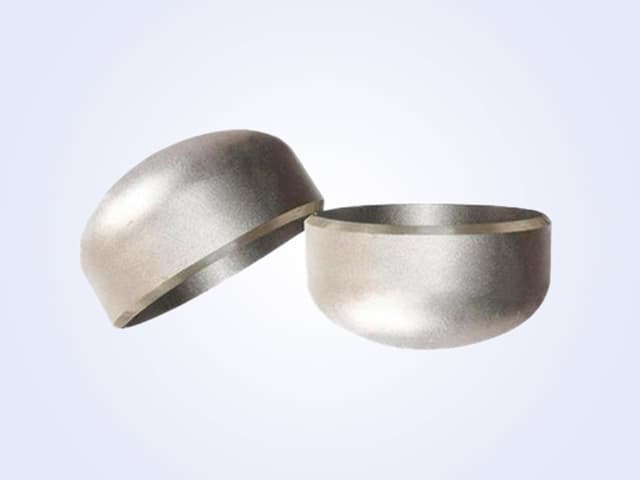
Products covered in this article
Sourcing any of these? Send the spec and our pressure-piping desk replies within 4 business hours.
Related reading
 Technical
Flange Facing and Gasket Compatibility Checklist
ASME publishes separate standards for metallic and nonmetallic gaskets. This checklist helps buyers cross-check gasket type, flange facing, and procurement details before issuing an RFQ.
 Technical
ASME B16.21 Nonmetallic Flat Gasket Selection Guide
ASME B16.21 defines nonmetallic flat gaskets for pipe flanges. This guide explains the standard's scope, why you must pair it with the mating flange standard, and what to verify during procurement to avoid misapplication.
TechnicalASME B16.20 Metallic Gasket Selection for Flanged Joints
Learn how to select ASME B16.20 metallic gaskets for pipe flanges, verify compatibility with ASME B16.5 flanges, and avoid procurement pitfalls.