Holiday detection is a critical quality control step for lined and coated pipe fittings. Internal linings and external coatings are applied to protect the substrate from corrosion, reduce product contamination, or both. However, even small pinholes or holidays can compromise the entire barrier. Because these discontinuities are frequently very minute and may not be readily visible, electrical testing is used to locate them. For EPC engineers and procurement managers, understanding the governing standards, method selection, and supplier verification steps is essential.
What Holiday Detection Actually Detects
Holiday detection relies on an electrically conductive substrate beneath a nonconductive coating. The test instrument is grounded to the coated substrate, and a charged electrode is passed over the coating surface. When the electrode encounters a holiday, current flows to the substrate, triggering an alarm.
ASTM G62 and ASTM D5162 are the two standards most commonly referenced for this testing. ASTM G62 covers holiday detection of coatings used to protect pipelines. ASTM D5162 is a standard practice for discontinuity (holiday) testing of nonconductive protective coating on metallic substrates.
Importantly, neither standard applies to every coating system. ASTM G62 explicitly states that it does not apply to holiday detection of tape wraps used to protect pipe or coatings containing conductive raw materials such as conductive pigments and extenders. If your lined or coated fittings use a conductive lining, holiday detection as described in these standards is not appropriate.
Method Selection: Low Voltage vs High Voltage
ASTM G62 identifies two methods:
Method A (low voltage) is designed to detect pinholes and holidays in thin-film coatings from 0.025 mm to 0.254 mm (1 mil to 10 mils) using ordinary tap water and an applied voltage of less than 100 V d-c. With a wetting agent added to the water, it is effective on films up to 0.508 mm (20 mils) thick.
Method B (high voltage) is designed for thick-film coatings greater than 0.508 mm (20 mils) and utilizes applied voltages between 3.4 kV and 35 kV d-c. It can be used on any thickness of pipeline coating, but the voltage must be selected and set correctly.
ASTM D5162 similarly notes that low voltage wet sponge test equipment is generally used for detecting discontinuities in coatings/linings having a total thickness of 0.5 mm (20 mil) or less, while high voltage spark test equipment is generally used for coatings/linings greater than 0.5 mm (20 mil). Coatings less than 0.5 mm may be susceptible to damage if tested with high voltage spark equipment. However, coatings greater than 0.25 mm (10 mil) and less than 0.5 mm (20 mil) may be tested with high voltage spark equipment provided the voltage is calculated and set correctly, and the coating manufacturer approves its use.
There is no universal test voltage. The correct setting depends on coating type, thickness, cure state, substrate continuity, geometry, and the specified low- or high-voltage method. For this reason, the coating manufacturer must be consulted for the recommended test voltage setting, especially when using Method B on ductile iron or other castings.
Special Considerations for Fittings and Castings
Pipe fittings present unique challenges. The thickness of a coating applied to ductile iron pipe, fittings, or other iron castings may vary substantially due to the inherent roughness of the substrate. In such cases, consult the coating manufacturer for their recommended test voltage setting when using Method B. That recommendation may be subject to approval by the owner.
The geometry of fittings—elbows, tees, reducers, flanges—can make complete electrode contact difficult. The buyer should confirm that the inspection procedure covers all surfaces, including internal surfaces of lined fittings where accessible.
Cure state also matters. The coating manufacturer must establish the length of time required to adequately dry or cure the applied coating or lining prior to testing. Solvents retained in an uncured coating may form an electrically conductive path through the film to the substrate and may also be a fire hazard.
Additionally, determine whether the coating or lining contains electrically conductive fillers or pigments that may affect the normal dielectric properties. This can affect the accuracy of the test.
RFQ Inputs and Procurement Checks
When sourcing lined or coated pipe fittings, include the following in your RFQ:
- Specify the coating or lining system, including nominal thickness and substrate material.
- Require that holiday detection be performed in accordance with ASTM G62 or ASTM D5162, as applicable.
- Ask the manufacturer to provide their recommended test voltage and the coating manufacturer's approval, particularly for Method B.
- Define the allowable number of discontinuities prior to testing. ASTM D5162 states that the acceptable quantity will vary depending on film thickness, design, and service conditions.
- State the required cure time before testing, and request evidence that the fittings were tested after full cure.
- Require documentation of the calibration of the test equipment and the training of the inspectors.
- For high voltage testing, ask for records of atmospheric conditions at the time of the test, because the dielectric strength of air varies with the conductivity of the air.
- Confirm that the coating is nonconductive and that no conductive pigments or extenders are present, unless a different test method is specified.
For a full range of lined and coated pipe fittings, review the product portfolio at Haihao Group's product page. When your specification is ready, submit your detailed requirements through our inquiry form to receive a technical review.
Inspection and Documentation Points
During inspection or third-party verification, confirm the following:
- The test method is consistent with the coating thickness.
- The voltage setting is documented, and the equipment is calibrated.
- The substrate is properly grounded and electrically continuous.
- All accessible surfaces are tested, with special attention to complex fitting geometries.
- The allowed number of discontinuities is defined in the purchase order, and the inspection report records the number and location of holidays found.
- If high voltage testing was used on a coating between 0.25 mm and 0.5 mm thick, the coating manufacturer's approval is on file.
The inspection report should also note the test date, the standard used, the method (A or B), the voltage setting, and the atmospheric conditions.
Common Risks and How to Avoid Them
- Applying high voltage to thin coatings. This can damage the coating. Use low voltage wet sponge for coatings 0.5 mm or less, unless the coating manufacturer has approved high voltage and the voltage has been correctly calculated.
- Testing before full cure. Retained solvents can create conductive paths and a fire hazard. Follow the coating manufacturer's cure time requirements.
- Using holiday detection on conductive coatings. If the coating contains conductive pigments or extenders, the test is invalid. Specify nonconductive coatings if holiday detection is required.
- Assuming a universal voltage. There is no single voltage that works for all coatings. Always obtain the coating manufacturer's recommendation.
- Ignoring roughness of castings. Thickness variation on ductile iron and other castings can lead to misleading results. The coating manufacturer's voltage recommendation is essential.
Sources
¿Necesita una cotización para los productos de este artículo?
Envíe sus especificaciones y nuestro equipo responderá en un día hábil.
Solicitar cotizaciónCotización en 4 horas
Productos tratados en este artículo
¿Necesita cotización? Envíe sus especificaciones y respondemos en 4 horas hábiles.
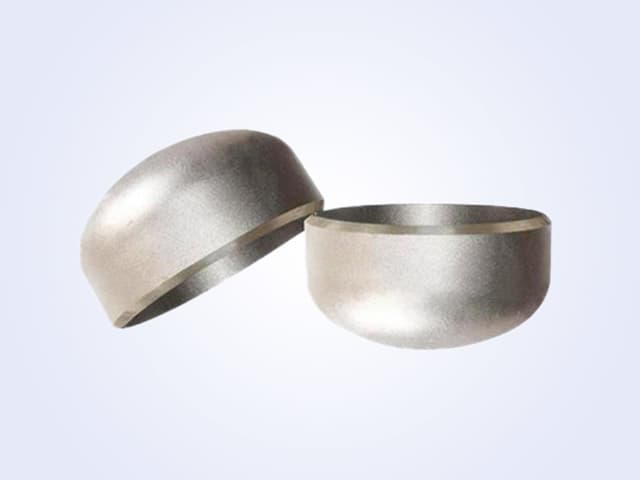 Reducción
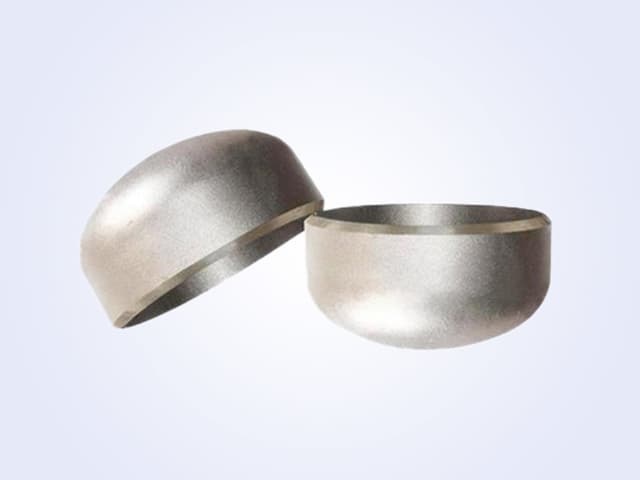 Reducción
ASTM A234 WPB/WP11/WP22; A403 WP304/WP316; A420 WPL6; carbon, alloy, stainless
 Reducción
ASTM A234 WPB/WP11/WP22; A403 WP304/WP316; A420 WPL6; carbon, alloy, stainless
Lecturas relacionadas
 Técnico
Microindentation Hardness Mapping Across a Fitting Weld HAZ
A hardness traverse across a fitting weld HAZ can reveal local variations that bulk readings cannot. This guide covers ASTM E384 and A370, practical procurement checks, and the need for governing acceptance limits.
 Técnico
Liquid Penetrant Testing for Nonporous Fittings: What Buyers Must Specify
How to specify PT per ASTM E165/E1417 for nonporous pipe fittings: procurement checks, inspection points, and common risks.
 Técnico
Magnetic Particle Examination of Steel Forgings: Buyer's Guide
How ASTM A275/A275M and E709 govern magnetic particle examination of steel forgings, what to specify, and what to verify with your supplier.