DISCLAIMER: Hebei Haihao Group does not claim participation in this project. This case study is based solely on public information and is provided for industry reference.
Project Milestone: First Cargo from LNG Canada
In June 2025, Shell announced that the first cargo had left the LNG Canada facility in Kitimat, British Columbia. This milestone marks a significant step for the project, which Shell describes as a new source of global LNG supply. For EPC engineers and procurement managers, the project serves as a real-world reference for the scale and complexity of cryogenic piping systems in LNG export terminals.
While the public announcement confirms the first cargo, it does not disclose technical details about piping materials, component quantities, or supplier contracts. Buyers should treat this case study as a reference point for understanding the procurement environment of large-scale LNG projects, not as a specification source.
What This Means for Cryogenic Piping Procurement
LNG projects require piping systems that can withstand extremely low temperatures, typically below -160°C. Materials such as austenitic stainless steels (e.g., 304/304L, 316/316L) and 9% nickel steel are commonly used, but the exact grades depend on design codes and service conditions. Since the LNG Canada announcement does not specify materials, buyers must rely on their own project specifications and applicable standards like ASME B31.3 or EN 13480.
For procurement, the key takeaway is the importance of verifying material traceability and low-temperature impact properties. For example, ASTM A420 WPL6 is a common fitting material for low-temperature service down to -45°C, but for LNG temperatures, buyers may need materials like ASTM A333 Grade 8 or 9% nickel steel. Always confirm the required Charpy impact test temperature with your design engineer.
Procurement Checks for Cryogenic Fittings
When sourcing butt-weld fittings for cryogenic service, consider the following checks:
- Material certification: Require EN 10204 3.1 or 3.2 mill test certificates, ensuring chemical composition and mechanical properties meet the specified grade.
- Impact testing: Verify that Charpy V-notch tests are performed at the design minimum temperature, not just at room temperature.
- Dimensional inspection: Ensure compliance with ASME B16.9 or other applicable standards. Check wall thickness, end bevels, and alignment.
- Surface finish: For cryogenic service, smooth surfaces reduce stress concentrations. Inspect for cracks, pits, or other defects.
- PMI testing: Positive Material Identification (PMI) using XRF or OES helps confirm alloy grades, especially for stainless steels.
RFQ Inputs for Cryogenic Piping Components
When preparing an RFQ for cryogenic pipe fittings, include the following information:
- Design code and edition (e.g., ASME B31.3)
- Service temperature and pressure
- Material grade and specification (e.g., ASTM A403 WP316L)
- Fitting type and size (elbows, tees, reducers, etc.)
- End preparation (bevel per ASME B16.25)
- Testing requirements (hydrostatic, NDT, PMI)
- Documentation requirements (MTCs, inspection reports)
Providing clear RFQ inputs helps suppliers quote accurately and reduces the risk of non-conformances.
Inspection and Documentation Points
For cryogenic fittings, inspection should focus on:
- Dimensional verification against ASME B16.9 or project specifications.
- Visual inspection for surface defects, especially on the inside of fittings.
- Non-destructive testing (NDT) such as radiography (RT) or ultrasonic testing (UT) for critical welds, and penetrant testing (PT) or magnetic particle testing (MT) for surface cracks.
- Hardness testing to ensure material is not over-hardened, which can reduce toughness.
- Review of MTCs to confirm heat numbers, chemical analysis, and mechanical properties.
Common Risks and How to Mitigate Them
- Material substitution: Suppliers may offer equivalent grades that are not truly equivalent. Always require documented evidence of equivalence and approval from the engineer.
- Inadequate impact properties: Fittings may pass room-temperature tests but fail at cryogenic temperatures. Specify impact testing at the minimum design temperature.
- Poor welding quality: Field welds on cryogenic piping require qualified procedures and welders. Ensure WPS/PQR are available and reviewed.
- Delayed documentation: Late MTCs can hold up project closeout. Include documentation deadlines in the purchase order.
How Hebei Haihao Group Can Support Your Piping Needs
While Hebei Haihao Group is not involved in LNG Canada, we offer a wide range of seamless butt-welding pipe fittings and prefabricated piping and installation services. Our products are manufactured to international standards, and we can provide the necessary documentation for your project. For cryogenic applications, we encourage buyers to specify their exact requirements so we can offer suitable solutions.
Conclusion
The LNG Canada first cargo is a reminder of the global scale of LNG infrastructure. For procurement professionals, it underscores the need for rigorous material selection, inspection, and documentation in cryogenic piping systems. By following the checks outlined above, you can mitigate risks and ensure the integrity of your piping components.
Sources
¿Necesita una cotización para los productos de este artículo?
Envíe sus especificaciones y nuestro equipo responderá en un día hábil.
Solicitar cotizaciónCotización en 4 horas
Productos tratados en este artículo
¿Necesita cotización? Envíe sus especificaciones y respondemos en 4 horas hábiles.
 Reducción
 Reducción
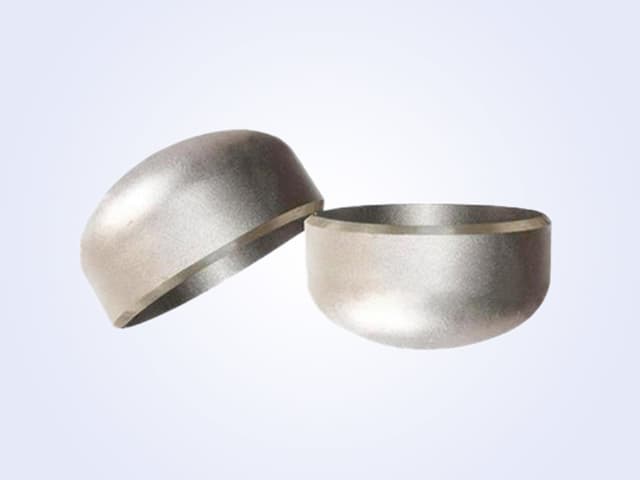
ASTM A234 WPB/WP11/WP22; A403 WP304/WP316; A420 WPL6; carbon, alloy, stainless
 Reducción
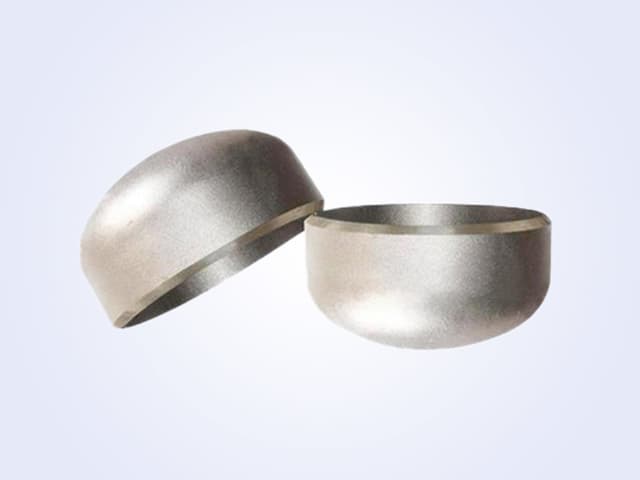
ASTM A234 WPB/WP11/WP22; A403 WP304/WP316; A420 WPL6; carbon, alloy, stainless
Lecturas relacionadas
 Casos
CasosJohan Castberg at Plateau: A Barents Sea Piping Reliability Reference
Equinor's Johan Castberg FPSO reached peak production in June 2025, three months after startup. This case study examines the project's scale and what it implies for cold-region piping procurement.
 Casos
CasosBacalhau Phase 1: A Deepwater Brazil FPSO Piping Reference
Equinor's Bacalhau Phase 1 in Brazil's Santos Basin is a landmark ultra-deepwater FPSO project. This reference guide for EPC engineers and procurement managers covers key facts, procurement considerations, and inspection points for piping systems in similar high-pressure, high-CO2 environments.
CasosMarsa LNG Oman: Electrified Liquefaction and Piping-System Reference
TotalEnergies and OQ's Marsa LNG project in Sohar, Oman, will use electric motors and a 300 MWp solar plant to produce one million tons of LNG per year. This case study examines the low-carbon design and what it means for piping procurement.