Why a Grade-Name Comparison Fails Before It Starts
The judgement up front: 20#, Q355B and ASTM A234 WPB are not three names for one material, and a file that records them as interchangeable is recording an assumption, not a verified position. What can be defended in an audit is narrower — a line-by-line comparison against the governing documents, with the design and purchasing functions deciding separately whether each difference matters for the service actually specified. The comparison itself is clerical work; the judgement is not.
The comparison fails structurally before any single value is compared, because the three documents are not the same kind of document. On its published description, A234/A234M covers wrought carbon steel and alloy steel fittings for moderate and elevated temperature service. GB/T 8163-2018 is a seamless tube specification, steel tubes for fluid conveyance, and GB/T 1591-2018 is a structural steel specification for low-alloy high-strength steels. Two of the three describe different product forms before they describe different chemistries, and a comparison that opens with the composition table has already skipped the distinction that matters most.
Read the Scope Clause Before the Grade Table
The first page to open is not the composition table; it is the scope clause together with the list of normative references. The four questions below each produce a line on the comparison sheet:
- Which product forms does the document cover — tube, fitting, plate, bar, forging stock?
- Which delivery conditions does it recognize, and which of them does your order actually invoke?
- Which edition is current, and which edition does the certificate quote?
- What does it say about material ordered to another specification, and under what conditions?
On editions the record is unambiguous. GB/T 8163-2018 was published on 2018-05-14, took effect on 2019-02-01, and fully replaces GB/T 8163-2008; it is a recommended national standard, currently in force, administered by the national technical committee for steel standardization. GB/T 1591-2018 follows the same pattern: published 2018-05-14, effective 2019-02-01, fully replacing GB/T 1591-2008, recommended, current, and under the same committee. A certificate citing a 2008 edition is not automatically wrong — it may simply reflect when the material was ordered — but it states a different promise from one citing the 2018 edition, and that difference belongs in the file, not in a footnote.
Chemistry: Compare Like With Like, or Do Not Compare
Chemistry comparison goes wrong in three predictable ways. Heat analysis versus product analysis is the first: a mill certificate may report either, and the permissible deviation between them is itself a defined quantity in specifications, so two figures for the same element can both be correct and still not be comparable. Residual and trace elements are the second: documents differ in which elements they limit, at what level, and whether the limit attaches to the heat or to the product. Reporting basis and rounding are the third.
This is also the item where no values are supplied here: the table below is deliberately a column of questions. Composition limits copied from distributor tables or grade-equivalence charts are how a substitution file acquires figures nobody can trace back to a clause. Take values from the editions named in your contract and put the clause reference beside each one.
| Check item | Chinese documents (GB/T 8163-2018 / GB/T 1591-2018) | Fitting specification (A234/A234M-26) | What the sheet must record |
|---|---|---|---|
| Product form | Tube and structural product, as scoped in each standard | Wrought carbon and alloy steel fittings | The form actually being bought |
| Grade designation | Chinese grade as written in the standard | WPB or another listed grade | Both designations verbatim, untranslated |
| Chemical composition | Limits from the grade table | Limits from the fitting specification | Element, limit, basis, clause |
| Analysis tolerances | As permitted in the standard | As permitted in the specification | Whether a certificate value is heat or product |
| Tensile properties | Per the standard's requirements | Per the specification's requirements | Specimen form, orientation, test temperature |
| Impact toughness | Whether required, and for which condition | Whether required, and for which condition | "Required" or "not required", with clause |
| Heat treatment | Delivery condition the standard recognizes | Condition the specification requires | Condition stated on the certificate |
| Testing and marking | Test categories and marking rules | Test categories and marking rules | Which tests the order invokes |
Every cell has one legitimate answer: "see clause X of edition Y". A cell that cannot be closed that way is an open item, not a passed check. The composition and mechanical-property rows stay open on this topic until someone reads both source texts side by side and fills them in; a supplier's comparison chart is not that reading.
Properties and Heat Treatment Are Not Portable
Tensile numbers look portable in a way that they are not. Before two strength figures are placed beside each other, confirm that they describe the same product form, the same specimen orientation and gauge, the same test temperature, and the same point in the manufacturing sequence. A result from a test piece cut from a fitting body and a result from a pipe-wall specimen answer different questions, and the gap between them is not a tolerance.
Heat treatment is where comparison sheets most often fall silent. Two certificates can report matching chemistry and matching tensile results while describing material in different delivery conditions, and the delivery condition is what was ordered, not a mill preference. Four sharper questions replace "does the certificate mention heat treatment":
- What delivery condition does the governing document require for this grade and product form, and what does it permit?
- Does the certificate state the condition applied, in the terms that document uses?
- Where more than one route is permitted, which one was ordered, and is the marking consistent with it?
- Where a result depends on the condition, was the test piece taken after that condition was applied?
Whether a Chinese delivery condition corresponds to an A234 condition is not something a chart settles. It has to be read clause by clause against both texts, and where both are silent, written into the order. On this sheet that is an open item, not a conclusion.
A Sequence That Survives Review
- Fix the documents. Standard number, edition year, product form and the revision in force, recorded on every line rather than in a covering note.
- Fix the question. One row per requirement, never one row per grade name.
- Fill from the text. A clause reference beside every entered value; a value without one is a rumour with a decimal point.
- Mark the gaps. Anything needing a design decision or a customer agreement is flagged open rather than inferred.
- Close with the order. Where the documents leave room, the purchase order states which option applies, so that inspection has something concrete to verify against.
The output is rarely a single word such as "equivalent". It is a list of confirmed matches, a shorter list of differences the design does not care about, and a list of open items that someone still has to close. That is a more useful document than a grade chart, and it is the one that still makes sense after the next edition appears.
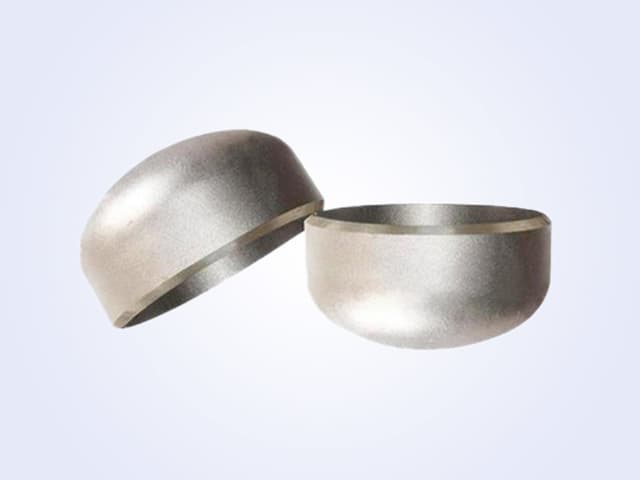
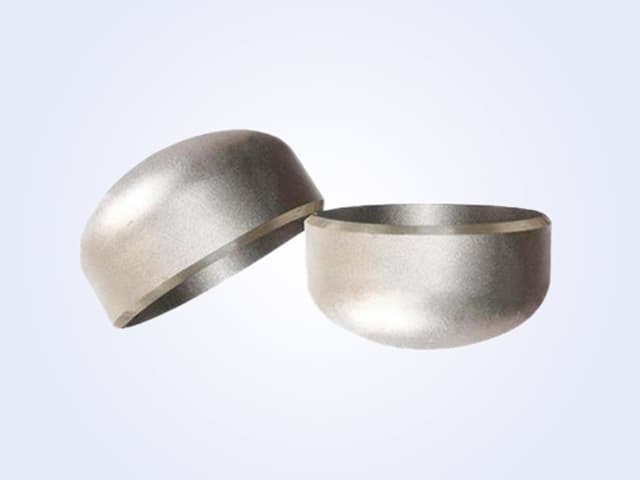
For the physical items on either side of this comparison, the pages for seamless butt welding pipe fittings and seamless steel pipes set out what is normally ordered, and the quality page describes how inspection documentation is handled. Send the standard number and edition with any enquiry, so the offer can be written against the same document the comparison was built from.
Sources
इस लेख में उल्लिखित उत्पादों के लिए कोटेशन चाहिए?
अपनी विशिष्टताएं भेजें और हमारी प्रेशर पाइपिंग टीम एक कार्य दिवस के भीतर जवाब देगी।
RFQ भेजें4 घंटे में कोटेशन
इस लेख में शामिल उत्पाद
कोटेशन चाहिए? अपनी विशिष्टताएं भेजें — हमारी टीम 4 कार्य घंटों में जवाब देगी।
संबंधित पठन
 तकनीकी
Bubble Emission vs Hydrostatic Leak Testing for Fittings
Choose between ASTM E515 bubble emission and ASTM E1003 hydrostatic leak testing for fittings: principles, sensitivity, and procurement checks.
 तकनीकी
Abrasion and Wear Testing for Lined Pipe Fittings
Understand ASTM G65 and G99 for abrasion and wear testing of lined pipe fittings. Learn how to interpret results, avoid common pitfalls, and specify tests in your RFQ.
 तकनीकी
Holiday Detection for Lined and Coated Pipe Fittings
Learn how ASTM G62 and D5162 apply to holiday detection for lined and coated pipe fittings, including method selection, procurement checks, and inspection points.