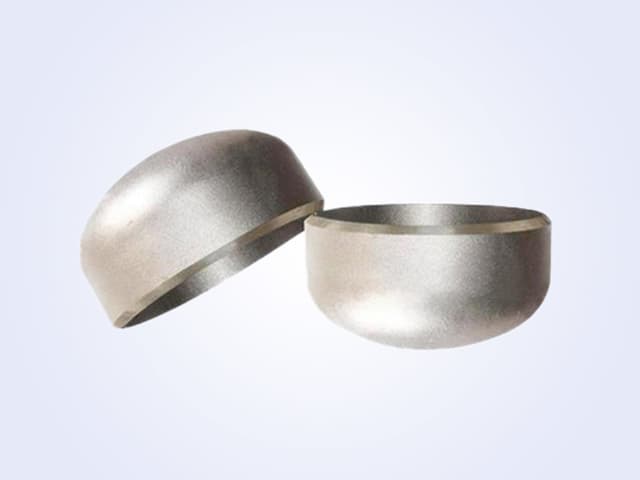
ASTM A182/A182M is the governing specification for forged or rolled alloy- and stainless-steel pipe flanges, forged fittings, valves, and parts for high-temperature service. When grain size appears in a purchase order, it is usually tied to ASTM E112. But the relationship between these two standards is often misunderstood. This guide separates what is mandatory from what is optional, and explains what procurement engineers and inspectors must verify.
Why Grain Size Is Not a Default Requirement
ASTM E112 provides test methods for determining average grain size. It does not set acceptance limits. A common mistake is to assume that referencing ASTM E112 in a material certificate or procedure automatically creates a pass/fail requirement for every grade. It does not. The acceptance requirement must come from the material specification, a supplementary requirement, a project specification, or the purchase order.
For A182 forged stainless fittings, the base specification only requires grain size testing for specific grades. Unless the buyer or project adds a requirement, grain size is not a universal acceptance criterion.
What ASTM A182 Actually Requires
ASTM A182/A182M covers forged or rolled alloy- and stainless-steel pipe flanges, forged fittings, valves, and parts for pressure systems. Products are limited to a maximum weight of 10 000 lb [4540 kg]. Larger products are covered by other specifications such as A336/A336M or A965/A965M.
The standard states that all H grades and grade F63 shall be tested for average grain size. That is a mandatory testing requirement. However, the standard does not impose a single grain size number on all such grades. The acceptance limit may be defined in the grade specification, in a supplementary requirement, or in the purchaser's project specification. If no limit is defined, the buyer must ask the manufacturer what applies.
ASTM A182 also includes supplementary requirements that apply only when specified individually by the purchaser in the order. If a project requires grain size verification for a grade that is not an H grade or F63, the requirement must be invoked through a supplementary requirement or written into the order.
How ASTM E112 Measures Grain Size
ASTM E112 describes three basic procedures for estimating average grain size. Each has different precision and suitability.
- Comparison procedure: The grain structure is compared with graded images, such as a wall chart, clear plastic overlay, or eyepiece reticle. This method is convenient for equiaxed grains and is generally accurate enough for commercial purposes. However, it has a known bias: comparison ratings tend to be 1/2 to 1 G number coarser than the actual value. Repeatability and reproducibility are generally ±1 grain size number.
- Planimetric procedure: An actual count of grains within a known area is used to determine the number of grains per unit area, then the ASTM grain size number G. This method is free of bias. A precision of ±0.25 grain size units can be achieved with reasonable effort, and repeatability and reproducibility are less than ±0.5 grain size units. Grains must be marked off as they are counted.
- Intercept procedure: The number of grain boundary intersections with a test line, per unit length, is counted. The mean lineal intercept length is then used to calculate G. This method is faster than planimetric for the same level of precision and can achieve better than ±0.25 grain size units. It is particularly useful for structures with elongated grains.
In case of dispute, the standard provides rules for reporting an average grain size. For high-integrity applications, planimetric or intercept methods are preferred over comparison due to their lower bias and better repeatability.
Procurement Checklist for Grain Size Verification
Before placing an order, verify the following:
- Is the grade an A182 H grade or F63? If yes, grain size testing is mandatory and the MTC must show test results.
- For other grades, does a supplementary requirement, project specification, or customer specification impose a grain size acceptance limit?
- What is the exact acceptance criterion? A minimum G number, a range, or a maximum mean lineal intercept length?
- Which ASTM E112 procedure will be used? Comparison, planimetric, or intercept?
- If using the comparison method, is the ±1 G repeatability acceptable for the application?
- For critical service, consider requiring a higher-precision method such as planimetric or intercept.
RFQ Inputs for Grain Size Testing
When requesting a quotation, include the following in your RFQ:
- Product standard and grade, e.g., ASTM A182 F316H or F63.
- Whether grain size is mandatory per the standard or an optional supplementary requirement.
- If supplementary, the exact requirement designation or wording.
- The acceptance limit, e.g., "average grain size per ASTM E112, planarimetric method, G5 or finer."
- The test method and procedure, if the buyer has a preference.
- Documentation requirements, such as an EN 10204 3.1 certificate with grain size results.
- Third-party witnessing or laboratory accreditation requirements, if any.
If the buyer does not know the correct acceptance limit, the RFQ should ask the manufacturer to state what is applicable for the selected grade and any available supplementary requirements. Do not request a "standard grain size" without defining a number, because none may exist.
Inspection and Documentation Points
- Review the material test certificate (MTC) and confirm the grade designation matches the purchase order.
- For H grades and F63, verify that grain size test results are present. Do not accept a blank field as evidence of compliance.
- Check the test method reference. A statement such as "grain size per ASTM E112" is incomplete unless it also states the procedure and the result.
- Confirm the laboratory is qualified and, if required by the project, accredited.
- If the reported grain size is outside the specified limit, reject the material unless an approved deviation is documented.
- Retain records of the applicable standard edition, supplementary requirements, and order documents.
Common Risks and How to Avoid Them
- Risk: Assuming every A182 grade requires a grain size number. Avoid: Confirm the grade-specific requirement before placing the order.
- Risk: Using the comparison method when tight control is needed. Avoid: Specify planimetric or intercept for precision-critical applications.
- Risk: Accepting an MTC that lists "ASTM E112" without a numeric result. Avoid: Require the actual G number and test method on the certificate.
- Risk: Confusing the test method with an acceptance limit. Avoid: Define pass/fail criteria in the purchase order.
- Risk: Overlooking the mandatory testing for H grades and F63. Avoid: Add a line to your inspection checklist that flags these grades.
Practical Guidance for Buyers
Grain size verification is not a one-size-fits-all requirement. For EPC engineers and inspectors, the key questions are: Does the selected grade require grain size testing under A182? Has the purchaser added a supplementary requirement? Does the MTC contain the required information? By answering these questions, you can avoid both over-specification and under-verification.
For a range of forged stainless fittings and flanges, review the product catalog at Haihao products. To discuss a specific grain size requirement or request a quotation, use the inquiry page.
Sources
- https://store.astm.org/a0182_a0182m-26a.html
- https://store.astm.org/e0112-13r21.html
4시간 내 견적
이 기사에서 다룬 제품
견적이 필요하신가요? 사양을 보내주시면 4영업시간 내에 답변드립니다.
관련 읽을거리
 기술
기술Subsize Charpy Specimens and Impact Test Records for Fittings
Charpy impact records for pipe fittings often include subsize specimens. Learn what ASTM E23 and A370 actually require, and where acceptance criteria must be found.
 기술
기술Weld Repair Acceptance for Wrought Steel Fittings
Weld repair acceptance for A234 and other wrought steel fittings is governed by the product specification, A960/A960M common requirements, and the purchase order — not by a generic visual pass/fail rule. Here's what to verify.
 기술
기술ASTM A960 Wrought Fitting Requirements: What Buyers Must Know
ASTM A960 sets common requirements for wrought steel pipe fittings covered by individual ASTM product specs like A234. This guide explains what buyers must verify when ordering and inspecting fittings.