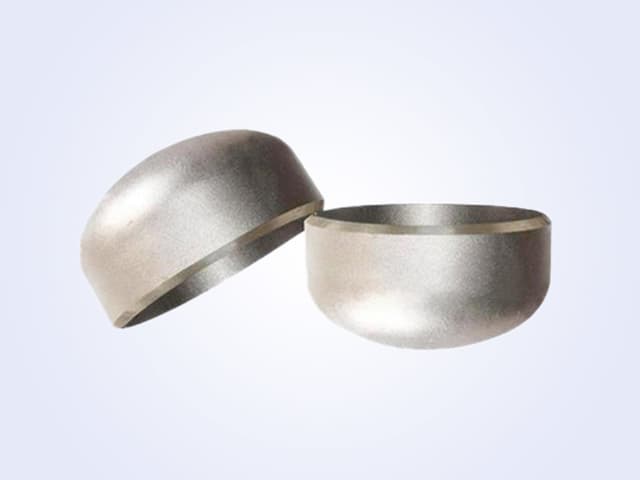
When an EPC project specifies flanges, elbows, tees, or reducers that will be joined in a mixed-metal piping system, galvanic corrosion is a risk that cannot be resolved with a simple metal-names checklist. The galvanic series is a useful starting point, but only when applied with the test data and environmental boundaries that ASTM standards describe. This article outlines what the current ASTM guides cover and how procurement engineers should use them when buying pipe fittings and flanges.
What a Galvanic Series Can and Cannot Tell You
A galvanic series lists metals in order of corrosion potential in a specific environment. When two dissimilar metals are in electrical contact in an electrolyte, the more active (electronegative) metal tends to corrode faster, while the more noble (electropositive) metal tends to be protected. The further apart the metals are in the series, the larger the potential difference and the greater the driving force for galvanic corrosion—assuming all other factors are equal.
That assumption is rarely true in real service. According to ASTM G82, a galvanic series is environment-dependent and should not be treated as one universal ranking for all services. The same two alloys can show different potential differences when electrolyte, temperature, flow, or surface condition changes. A chart that works for seawater may not hold for a chemical process line.
ASTM G82: Developing and Using a Galvanic Series
ASTM G82-98(2021)e1 is the standard guide for the development and use of a galvanic series for predicting galvanic corrosion performance. It describes how to arrange materials in order of observed corrosion potentials in the environment and conditions of interest. The guide explains that when two dissimilar metals are coupled, the more active metal will tend to undergo increased corrosion, while the more noble metal will tend to show reduced corrosion. It also notes that the potential difference is a driving force, but not a direct predictor of corrosion rate.
For a buyer, G82 frames the galvanic series as a screening tool rather than a final answer. If a supplier claims two materials are compatible based on a generic chart, ask which environment that chart was developed for.
ASTM G71: Conducting and Evaluating Galvanic Corrosion Tests
ASTM G71-81(2024) is the standard guide for conducting and evaluating galvanic corrosion tests in electrolytes. It covers material selection, specimen preparation, test environment, exposure method, and evaluation of results for galvanic couples under low-flow conditions. This standard is relevant when an EPC engineer needs to compare candidate fitting materials for a specific service. G71 provides a structured approach for lab or service-environment testing that can generate data for a particular electrolyte and couple.
Why Environment-Dependence Matters for Fitting Assemblies
Fittings and flanges are rarely the only metals in a piping system. A carbon steel flange bolted to a stainless steel valve creates a galvanic couple. The severity depends on the electrolyte, cathode-to-anode area ratio, electrical continuity through bolting or gaskets, coating condition, temperature, flow, and crevices.
A universal galvanic series table cannot capture these variables. A small anode connected to a large cathode can suffer accelerated corrosion out of proportion to the potential difference. Use the galvanic series to screen for problematic combinations, then verify with test data or an engineering assessment for the service environment.
Procurement Checks for Dissimilar-Metal Fittings
When specifying fittings and flanges that will join different metals:
- Confirm material grades for the fitting, bolting, gaskets, and weld filler.
- Define the electrolyte, temperature range, flow rate, pH, and coating plan.
- Ask whether the supplier has galvanic test data per ASTM G71 for the specific material pair and environment.
- Check project specifications for corrosion engineering review, cathodic protection, or dielectric isolation requirements.
RFQ Inputs Your Supplier Needs
Provide these in your request for quotation:
- Exact material standards and grades for each wetted component.
- Electrolyte composition, temperature, flow velocity, and dissolved gases.
- Whether the assembly will be painted, coated, or wrapped.
- Cathode-to-anode surface area ratio, if known.
- Whether galvanic testing per ASTM G71 is required and who will witness it.
- Required documentation: material test certificates, test reports, and compliance statements.
Inspection and Documentation Points
Include these checks in the inspection plan:
- Verify material test certificates against agreed grades.
- Confirm galvanic test reports reference ASTM G71 and state the test electrolyte and exposure conditions.
- Check that actual materials, including weld filler and bolting, match the approved documentation.
- Review coating or insulation to prevent unintentional electrical continuity.
Common Risks and How to Manage Them
The most common risk is selecting materials from a generic chart without verifying the environment. Require that compatibility claims identify the electrolyte and conditions.
Another risk is overlooking area ratio. A small active fitting coupled to a large noble pipe surface can fail quickly. Consider dielectric isolation or corrosion allowance if geometry is fixed.
Electrical continuity through bolting or gaskets is a common field surprise. Specify non-conductive gaskets or coated bolts when needed.
Finally, do not use potential difference alone to predict corrosion rate. ASTM G82 cautions that a greater potential difference frequently, but not always, results in greater corrosion.
For a full range of piping components, review the products at Haihao's products page. To discuss a galvanic concern for a specific assembly, send an RFQ through the inquiry form with the environmental data described above.
Sources
- https://store.astm.org/g0082-98r21e01.html
- https://store.astm.org/g0071-81r24.html
4시간 내 견적
이 기사에서 다룬 제품
견적이 필요하신가요? 사양을 보내주시면 4영업시간 내에 답변드립니다.
관련 읽을거리
 기술
Bent-Beam and U-Bend Stress Corrosion Testing for Fitting Alloys
Understand ASTM G36 and G30 for stress-corrosion cracking screening of fitting alloys. Learn what to specify, inspect, and avoid in procurement.
 기술
Ferric Chloride Pitting Tests for Duplex Fittings: What Buyers Must Verify
ASTM G48 ferric chloride tests and ASTM A923 phase detection are complementary, not interchangeable. Learn what to specify, inspect, and verify when buying duplex fittings.
 기술
Intergranular Corrosion Tests for Austenitic and Ferritic Fittings
ASTM A262 and ASTM A763 detect intergranular attack in austenitic and ferritic stainless steels respectively. Learn which practice to specify, how to write RFQs, and what to check on test reports.