Why B16.36 Is Not Just a B16.5 Variant
When you need an orifice flange for flow measurement, the governing standard is ASME B16.36 – Orifice Flanges. It covers pressure-temperature ratings, materials, dimensions, tolerances, testing, and marking for flanges that have orifice pressure differential connections. The scope is deliberately narrow: welding neck flanges in Classes 300, 400, 600, 900, 1500, and 2500, plus slip-on and threaded flanges in Class 300 only.
That limitation is the first thing buyers often miss. If your application requires a Class 150 orifice flange or a slip-on in Class 600, B16.36 does not cover it. You must either use a different standard or work with a manufacturer that can design to your project specification. Do not assume that a standard B16.5 flange with tapped holes is automatically compliant.
ASME B16.5, by contrast, covers general pipe flanges and flanged fittings from NPS 1/2 through NPS 24, with rating classes 150 through 2500. It includes pressure-temperature ratings, materials, dimensions, tolerances, marking, and testing. B16.36 builds on B16.5 but adds specific requirements for the orifice pressure taps and the flange face details that make differential pressure measurement possible.
Scope and Coverage: What B16.36 Includes
The 2025 edition of B16.36 is 42 pages and is on stabilized maintenance, meaning it is no longer actively revised but remains in effect. The standard explicitly limits coverage to:
- Welding neck flanges: Classes 300, 400, 600, 900, 1500, and 2500
- Slip-on and threaded flanges: Class 300 only
This is a critical RFQ input. If you need a Class 150 orifice flange, you are outside the standard. If you need a slip-on in Class 600, you are outside the standard. In those cases, you must specify an alternative design and verify that it meets your process requirements.
Also note that B16.36 does not cover the orifice plate itself, the meter tube, or the instrumentation. Those are governed by other standards such as AGA Report No. 3 or ISO 5167. The flange standard only addresses the flanges with pressure taps. Buyers often conflate these, leading to incomplete specifications.
RFQ Inputs: What to Specify Clearly
When preparing an RFQ for orifice flanges, include the following:
- Standard and edition: ASME B16.36-2025 (or the edition your project requires).
- Flange type: welding neck, slip-on, or threaded. Remember the class limitations.
- Size and class: NPS and pressure class. Verify that the combination is within B16.36 scope.
- Material specification: e.g., ASTM A105 for carbon steel, ASTM A182 F316 for stainless. B16.36 references B16.5 materials, but you must specify the exact grade.
- Orifice tap configuration: The standard covers flanges with orifice pressure differential connections. You must specify the tap location (flange taps, corner taps, etc.) and the tap size. B16.36 provides dimensions for the taps, but the exact configuration may depend on your meter design.
- Raised face or RTJ: Orifice flanges often use raised face or ring-type joint facings. Specify which.
- Gasket type: The standard includes requirements for gaskets, but you must select the appropriate gasket for your service.
- Bolting: Specify bolting material and size per B16.5 or project requirements.
- Marking and testing: B16.36 requires marking per B16.5, but you may need additional marking for the orifice taps.
Procurement Checks: What to Verify with the Manufacturer
Before placing an order, verify the following with your supplier:
- Scope compliance: Confirm that the flange type and class are within B16.36. If not, ask for a written deviation and engineering approval.
- Material traceability: Request mill test certificates per EN 10204 3.1 or 3.2 as applicable. Verify that the material grade matches your specification.
- Dimensional inspection: B16.36 provides specific dimensions for the orifice taps and the flange face. Ask the manufacturer for a dimensional report showing compliance.
- Pressure-temperature rating: Confirm that the flange rating is suitable for your design conditions. B16.36 references B16.5 ratings, but you must verify against your process.
- Testing: B16.36 requires testing similar to B16.5. Ask what tests are included (hydrostatic, etc.) and request certificates.
- Marking: Verify that the flange is marked with the standard designation, size, class, material, and any required tap identification.
Inspection and Documentation Points
When inspecting orifice flanges, pay attention to:
- Orifice tap dimensions: Measure the tap diameter and location. B16.36 specifies these; deviations can affect flow measurement accuracy.
- Flange face finish: The raised face finish must meet B16.5 requirements. A poor finish can cause gasket leaks.
- Concentricity: The flange bore and the orifice tap alignment must be correct. Misalignment can cause measurement errors.
- Material verification: Perform PMI if required by your project. Verify that the material is as specified.
- Dimensional report: Request a full dimensional report from the manufacturer, including tap locations and flange thickness.
- Certificate review: Check the MTC for correct heat number, material grade, and test results. Ensure that the certificate is signed and dated.
Common Risks and How to Avoid Them
- Using the wrong standard: Specifying B16.5 when you need B16.36, or vice versa. Always reference the correct standard in your RFQ.
- Ignoring scope limitations: Ordering a Class 150 orifice flange that is not covered by B16.36. Verify scope before ordering.
- Incomplete tap specification: Not specifying the tap configuration, leading to mismatched flanges and meter tubes.
- Assuming B16.36 covers the orifice plate: It does not. You must specify the plate separately.
- Poor documentation: Not requesting MTCs or dimensional reports, leading to acceptance issues.
How Haihao Group Can Help
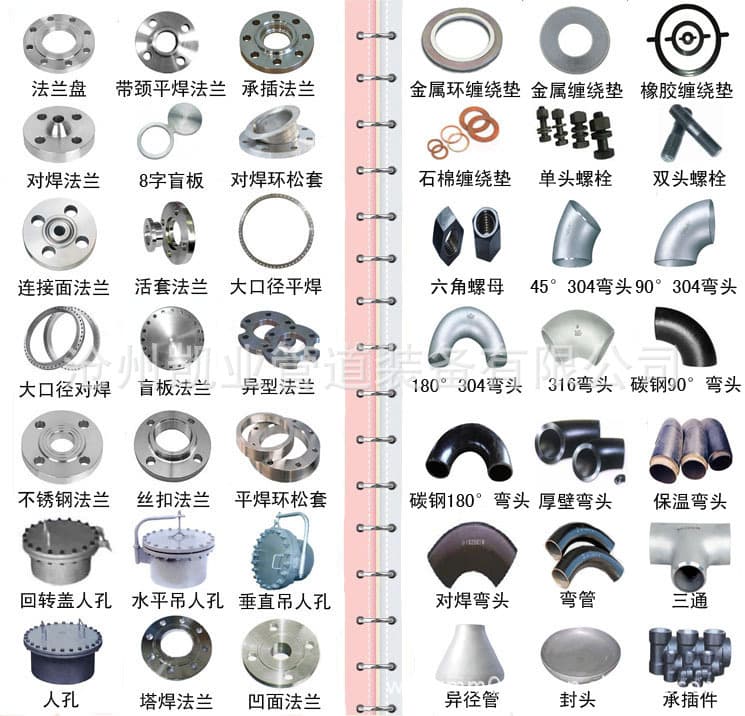
At Hebei Haihao Group, we manufacture forged flanges and pipe accessories to international standards. Our product range includes forged flanges and nonstandard forgings that can be tailored to your orifice flange requirements. We also supply pipe accessories such as gaskets and bolting to complete your assembly.
When you send us an RFQ, our engineers will review your specification and confirm that the flange type and class are within B16.36 scope. If you need a nonstandard configuration, we will discuss options and provide a clear deviation for your approval.
Sources
- https://www.asme.org/codes-standards/find-codes-standards/b16-36-orifice-flanges
- https://www.asme.org/codes-standards/find-codes-standards/b16-5-pipe-flanges-flanged-fittings-nps-1-2-nps-24-metric-inch-standard
4시간 내 견적
이 기사에서 다룬 제품
견적이 필요하신가요? 사양을 보내주시면 4영업시간 내에 답변드립니다.
관련 읽을거리
 구매 가이드
Hydrogen Piping Components: What an ASME B31.12 RFQ Must Define
ASME B31.12 governs hydrogen piping and pipelines. This guide explains what EPC engineers and procurement managers must specify in an RFQ for seamless pipes and socket-weld forged fittings, covering code parts, material verification, and inspection requirements.
 구매 가이드
Buttweld Spool Fit-Up: Coordinating ASME B16.9 Fittings and B16.25 Ends
Learn how to coordinate ASME B16.9 fittings with B16.25 bevel ends for reliable buttweld spool fit-up. Includes procurement checks, inspection points, and common risks.
 구매 가이드
Valve End Connections and Mating Flanges: A B16.34 and B16.5 Buying Guide
Understand how ASME B16.34 and B16.5 interact for valve-to-flange compatibility. Learn key procurement checks, RFQ inputs, and inspection points to avoid mismatches.