Why ASTM A815 and A923 Matter for Duplex Fittings
Duplex stainless steel fittings combine high strength with excellent corrosion resistance, but their performance depends on correct heat treatment and the absence of detrimental intermetallic phases. ASTM A815/A815M is the governing specification for wrought ferritic, ferritic/austenitic, and martensitic stainless steel piping fittings. ASTM A923 provides test methods to detect harmful intermetallic phases in duplex grades. Together, they form the backbone of a reliable duplex fitting procurement.
For EPC engineers and procurement managers, a clear RFQ is the first line of defense against receiving fittings that meet chemistry but fail in service. This article provides a practical checklist for specifying duplex fittings under ASTM A815 and A923, with emphasis on what to include in your RFQ and what to verify during inspection.
Understanding ASTM A815 Fitting Classes
ASTM A815 covers two general classes: WP and CR. Class WP fittings are manufactured to ASTM A960/A960M and are subdivided into four subclasses:
- WP-S: Seamless fittings made by a seamless method.
- WP-W: Fittings containing welds where fabrication or construction welds have been radiographed.
- WP-WX: Fittings where all welds have been radiographed.
- WP-WU: Fittings where all welds have been ultrasonically tested.
Class CR fittings are manufactured to MSS SP-43 and have pressure ratings compatible with the relevant section of A815.
Your RFQ must specify the exact class and subclass. For example, a seamless duplex elbow should be marked WP-S, while a welded reducer may be WP-W or WP-WX depending on the extent of radiography. Do not assume that "duplex" alone is sufficient—define the class to avoid ambiguity.
ASTM A923: Testing for Detrimental Intermetallic Phases
Duplex stainless steels are susceptible to precipitation of intermetallic phases (such as sigma, chi, and alpha prime) when exposed to temperatures in the range of approximately 600 to 1750 °F (320 to 955 °C). These phases can significantly reduce toughness and corrosion resistance. ASTM A923 provides three test methods to detect their presence:
- Test Method A: Sodium hydroxide etch test for classification of etch structures.
- Test Method B: Charpy impact test for classification of structures.
- Test Method C: Ferric chloride corrosion test for classification of structures.
Important: ASTM A923 states that compliance with chemical and mechanical requirements does not necessarily prove the absence of detrimental phases. Therefore, if your project requires resistance to intermetallic phases, you must specify A923 testing explicitly.
However, not every project needs all three methods. The choice of method, specimen location, and acceptance criteria must be defined by engineering. For example, a sour service application may require Test Method C (ferric chloride) to verify corrosion resistance, while a low-temperature application may prioritize Test Method B (Charpy impact). Your RFQ should state which method(s) are required and the acceptance limits.
Building Your RFQ: Key Inputs
When preparing an RFQ for duplex stainless fittings, include the following details:
- Alloy Grade: Specify the exact UNS number (e.g., S31803, S32205, S32750) and any supplementary requirements.
- ASTM A815 Class: WP-S, WP-W, WP-WX, WP-WU, or CR.
- Dimensional Standard: ASME B16.9, MSS SP-43, or other applicable standard.
- Heat Treatment: Solution annealing temperature and cooling method (e.g., water quench).
- Corrosion Testing: Specify A923 Test Method(s) and acceptance criteria.
- NDE Requirements: Radiography (RT), ultrasonic (UT), penetrant (PT), or others as per class.
- Documentation: Mill test certificates (EN 10204 3.1 or 3.2), heat treatment charts, and test reports.
- Marking: Per MSS SP-25 or as specified.
A well-defined RFQ prevents misunderstandings and ensures the supplier can quote accurately. If you are unsure about any requirement, ask the supplier for clarification before ordering.
Procurement Checks and Inspection Points
During manufacturing and pre-shipment inspection, verify the following:
- Material Traceability: Confirm that the heat number and grade match the MTC.
- Heat Treatment Records: Ensure solution annealing was performed at the correct temperature and cooling rate.
- A923 Test Reports: If specified, review the test method, specimen location, and results against acceptance criteria.
- Dimensional Inspection: Check critical dimensions (e.g., wall thickness, end bevel) per the dimensional standard.
- NDE Reports: For welded fittings, verify that RT or UT was performed as required by the class.
- Surface Condition: Look for cracks, laps, or other defects that could affect performance.
Common risks include:
- Incorrect Heat Treatment: Fittings that are not properly solution annealed may contain intermetallic phases, leading to premature failure.
- Inadequate Testing: Relying only on chemistry and mechanical properties may miss detrimental phases.
- Class Mismatch: Supplying a welded fitting when a seamless one was specified, or vice versa.
To mitigate these risks, require third-party inspection if your project demands it, and always review the documentation before shipment.
Conclusion
Duplex stainless fittings are critical components in demanding applications. By specifying ASTM A815 class and ASTM A923 testing correctly in your RFQ, you ensure that the fittings meet your project's performance requirements. Use the checklist above to communicate clearly with suppliers and avoid costly mistakes.
For a wide range of duplex and other alloy fittings, visit our products page. If you have specific requirements, contact us for a detailed quotation.
Sources
- https://www.astm.org/a0815_a0815m-24.html
- https://www.astm.org/a0923-23.html
Нужен расчёт по товарам из статьи?
Пришлите спецификации — отдел напорных трубопроводов ответит в течение рабочего дня.
Отправить RFQРасчёт за 4 часа
Продукция из этой статьи
Нужен расчёт? Пришлите спецификации — отдел напорных трубопроводов ответит в течение 4 рабочих часов.
 Переход
 Переход
ASTM A234 WPB/WP11/WP22; A403 WP304/WP316; A420 WPL6; carbon, alloy, stainless
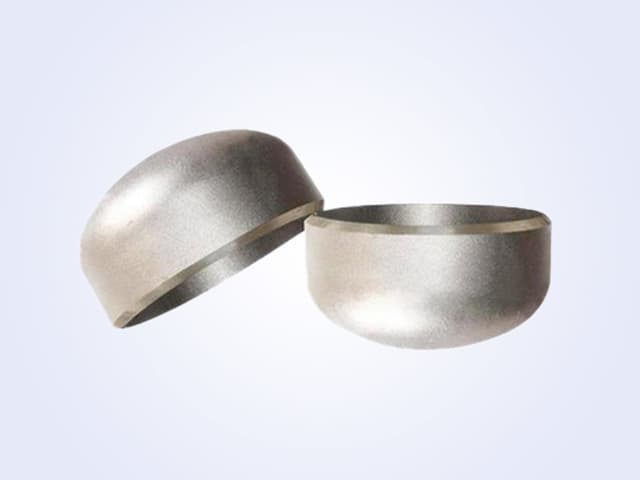 Переход
ASTM A234 WPB/WP11/WP22; A403 WP304/WP316; A420 WPL6; carbon, alloy, stainless
Похожие материалы
 Руководство
NDT Personnel Certificate Review: Method, Level, Sector and Scope
Verifying NDT personnel certificates is more than checking a name and expiry date. This guide explains the key elements—method, level, sector, and scope—and highlights the differences between ISO 9712, ASNT 9712, ASNT NDT, and employer-based SNT-TC-1A certifications.
 Руководство
How to Review WPS, PQR and Welder Qualification Documents
A practical guide for EPC engineers and procurement managers on reviewing welding procedure specifications (WPS), procedure qualification records (PQR), and welder certificates, with key checks and common pitfalls.
 Руководство
Metallic vs Nonmetallic Flange Gaskets: A Buyer Selection Guide
Choosing between metallic and nonmetallic flange gaskets requires more than a quick comparison. This guide explains the ASME standards that govern each family, the critical factors to evaluate, and the procurement checks that prevent costly joint failures.