The short answer: two documents, two jobs
GB/T 13401-2025, Technical Specification for Steel Buttwelding Fittings, does not replace GB/T 12459-2025, and it is not a list of optional extras to it. The two standards run in parallel. Both were issued on 2025-10-31, both take effect on 2026-05-01, and both are administered by the same national technical committee for pipeline accessories (全国管路附件标准化技术委员会). Their titles already divide the work: GB/T 12459-2025 covers types and parameters, GB/T 13401-2025 covers technical conditions. The first fixes what shape and dimensional series a fitting has; the second fixes what it is made of, how it is manufactured and how it is inspected. A purchase document that cites only one of them leaves a gap. Cite only types and parameters, and the technical conditions have no source. Cite only the technical specification, and the dimensional basis is incomplete.
What sits in each document
A buttwelding fitting requirement has two layers. The first layer is geometry and interfaces: the type, dimensional series and parameters of elbows, tees, reducers and similar products. Design selection and quotation settle nominal size and the wall-thickness relationship at this layer. The second layer is quality and technical conditions: material requirements, control of the manufacturing process, inspection and testing, marking, and the mill documentation that travels with the goods. This layer decides whether a delivered fitting passes acceptance.
The titles of the two standards separate those layers already. GB/T 12459-2025 is titled types and parameters, which corresponds to the geometry layer. GB/T 13401-2025 is titled technical specification, which corresponds to the conditions layer. In day-to-day work this means the selection tables are checked against GB/T 12459-2025, while the manufacturing plan, the inspection and test plan and the acceptance criteria refer to GB/T 13401-2025.
How the two documents cross-reference each other, how their clauses are divided into sections, and which one prevails where one cites the other all have to be checked against the standard texts. This article discusses the division of work and the way to cite both documents in a contract. It is not a substitute for the standards themselves.
Version status and key dates
The fields below come from the public record on the standards detail pages:
| Item | GB/T 13401-2025 | GB/T 12459-2025 |
|---|---|---|
| Title | Technical Specification for Steel Buttwelding Fittings | Steel Buttwelding Fittings — Types and Parameters |
| Status | Current | Current |
| Issue date | 2025-10-31 | 2025-10-31 |
| Implementation date | 2026-05-01 | 2026-05-01 |
| Replacement | Fully replaces GB/T 13401-2017 | Not inferred in this article |
| Administering committee | National technical committee for pipeline accessories | National technical committee for pipeline accessories |
| National standards plan number | 20232921-T-604 | Not inferred in this article |
Both are recommended national standards, as the GB/T prefix indicates. GB/T 13401-2017, the previous edition of the same specification, was issued on 2017-02-28 and implemented on 2017-09-01, and its status is now withdrawn. The 2025 edition fully replaces it rather than partly replacing it, and that wording matters. A contract signed after 2026-05-01 that says only GB/T 13401 without a year will, under normal document control practice, be read as the 2025 edition. Projects still designed to the 2017 edition should keep the year in drawings and technical agreements so that the edition cannot drift during execution.
The plan number 20232921-T-604 also shows who drafted GB/T 13401-2025. The main drafting organisations include Jiangyin Nanfang Pipe Fittings Manufacturing Co., Ltd., CNPC EastChina Design Institute Co., Ltd. and Sinopec Shanghai Engineering Co., Ltd., among others, so the drafting group covered both fitting manufacturers and design institutes from the petrochemical and petroleum sectors.
How to word the citation in a contract
Six clauses that can be copied into a technical agreement:
- Write both numbers in full, each with its year: GB/T 12459-2025 and GB/T 13401-2025. Do not merge them into a combined form such as GB/T 12459/13401.
- Put the division into the clauses: type, dimensions and parameters per GB/T 12459-2025; materials, manufacturing, inspection and acceptance per GB/T 13401-2025.
- State the replacement: GB/T 13401-2025 fully replaces GB/T 13401-2017, and new orders placed under a contract effective after the implementation date no longer refer to the 2017 edition.
- Agree how conflicts are resolved: when the standards, the design documents and the data sheet disagree, apply the precedence order written in the contract and name who has the final say.
- Carry the open points into the inspection plan: material, heat treatment, non-destructive testing and test items each get their own clause. Avoid the empty phrase "in accordance with the standard".
- Attach the documents: the type and content of the mill certificates follow the contract.
Sending both standard numbers with years at the enquiry stage, together with the data sheet, is what keeps the supplier's process route and inspection scope aligned with the enquiry. Send only one of them and the gap usually surfaces at incoming inspection. For the product scope covered, see the seamless butt welding pipe fittings page; for edition tracking, see standards; for inspection and documentation flow, see quality.
What must be checked against the standard text
This article deliberately gives no figures. Each item below has to be checked against the standard text before it goes into a technical agreement:
- Materials: the range of grades and their conditions of use — to be checked against the standard text.
- Heat treatment: the regime and its conditions of application — to be checked against the standard text.
- Inspection and testing: non-destructive testing methods, inspection proportions, test items and acceptance criteria — to be checked against the standard text.
- Marking, packaging and the specific contents of mill documentation — to be checked against the standard text.
- The technical changes between the 2025 and 2017 editions — to be compared clause by clause against both texts.
Only when those points are settled against the standard text and the project data sheet does "cited to the standard" become an inspection plan that can actually be executed. For projects already running, check the edition year written in the drawings and the contract first, then decide whether a clarification note is needed.
Sources
Нужен расчёт по товарам из статьи?
Пришлите спецификации — отдел напорных трубопроводов ответит в течение рабочего дня.
Отправить RFQРасчёт за 4 часа
Продукция из этой статьи
Нужен расчёт? Пришлите спецификации — отдел напорных трубопроводов ответит в течение 4 рабочих часов.
 Переход
 Переход
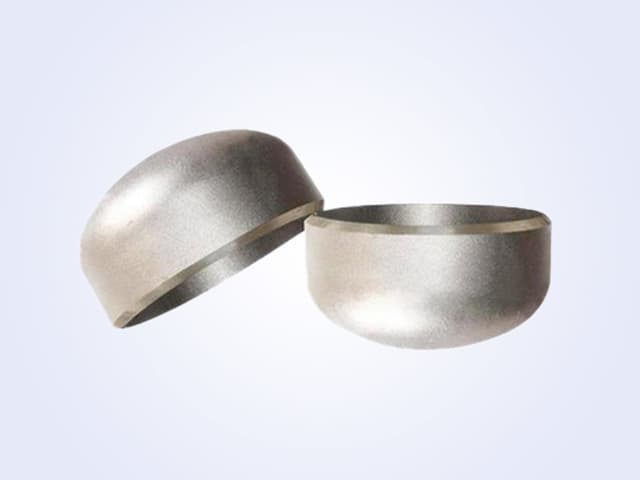
ASTM A234 WPB/WP11/WP22; A403 WP304/WP316; A420 WPL6; carbon, alloy, stainless
 Переход
ASTM A234 WPB/WP11/WP22; A403 WP304/WP316; A420 WPL6; carbon, alloy, stainless
Похожие материалы
 Стандарты
GB/T 12459-2025 Steel Buttwelding Fittings: New Edition, Effective Date and What It Replaces
GB/T 12459-2025 was issued on 31 October 2025 and takes effect on 1 May 2026, fully replacing the 2017 edition. Here is what buyers should now write in enquiries and purchase orders.
 Стандарты
China Pipe Fitting Standards Revised in 2025–2026: Effective Dates at a Glance
Ten Chinese fittings, tube and pressure-piping standards take effect from 2025-04-01 to 2027-04-01; four share 2026-05-01. Dated table and supersession lists for buyers.
 Стандарты
ISO 9712 NDT Personnel Certification: Buyer Verification Guide
Learn how to verify ISO 9712 NDT personnel certification for pipe fittings and flanges. Understand the difference between ISO 9712, ASNT central certification, and employer-based SNT-TC-1A, and get practical procurement checks.