The mileage is public; the diameter and steel grade are not
The one figure that circulates for the Sichuan–East Gas Pipeline II is 4,269 km, and on its own it settles nothing about what to buy. In a signed article in People's Daily on 16 January 2026 (page 19), Zhang Wei, chairman of PipeChina, presents the project as a major energy infrastructure project of China's 14th Five-Year Plan with a trunk line of about 4,269 km. The article states that the Sichuan section has been built and put into operation, that the completed project can add about 14 billion cubic metres of transmission capacity a year, and that more than 1,000 km of pipe is expected to be welded in 2026. It gives no pipe diameter, design pressure, steel grade or completion date for the whole line.
For a buyer of bends and fittings those four gaps come first: diameter drives forming tooling, design pressure drives wall thickness and test pressure, grade drives material and welding procedure, and the completion date drives delivery sequence. Multiplying mileage by an experience factor is quick, but it estimates four unknowns at once, and neither the offer quantity nor the schedule traces back to a document.
Three documents, not one
The technical basis is not a single file. GB/T 34275-2024, Pressure piping code — long-distance pipelines, covers design and construction of the pipeline as a whole; it is current, published and implemented on 31 December 2024. Bends and fittings sit in separate parts of GB/T 29168: Part 1, GB/T 29168.1-2021, covers induction bends, published on 20 August 2021 and effective from 1 March 2022; Part 2, GB/T 29168.2-2024, covers fittings, published on 29 September 2024 and effective from 1 January 2025.
| Document | Scope | Published | Effective |
|---|---|---|---|
| GB/T 34275-2024 | Pressure piping code — long-distance pipelines | 2024-12-31 | 2024-12-31 |
| GB/T 29168.1-2021 | Induction bends | 2021-08-20 | 2022-03-01 |
| GB/T 29168.2-2024 | Fittings | 2024-09-29 | 2025-01-01 |
A specification that says only "to the national standard", without part number and year, leaves nothing on which to decide a disagreement. Because the 2024 edition of Part 2 took effect on 1 January 2025, earlier purchasing files may quote an older edition and need re-checking against the standard texts. Bends sit in Part 1 and fittings in Part 2; the two do not share scope or test list, so a note reading "bends and fittings to GB/T 29168" has to be interpreted again at acceptance.
Hot-bent bends: every turn is its own line item
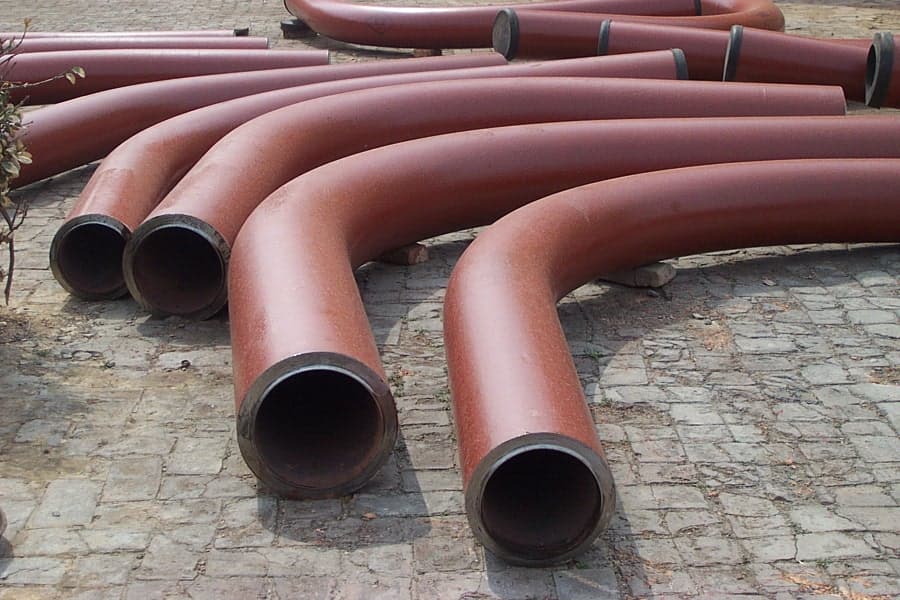
Induction bends, called hot-bent bends on site, carry the line through changes of direction. The longer the trunk line, the more turning points, so demand follows the route rather than spreading evenly along the kilometre count. With diameter and grade unpublished, an estimated bend quantity has little value: angle, radius and tangent length are fixed drawing by drawing.
The standard settles what counts as acceptable once formed. Wall thinning, ovality, tangent-point position, heat-treatment condition, testing and test items all fall inside GB/T 29168.1-2021, with permitted values and methods read from the text and not quoted here. The design documents settle what the bend has to be. Bends are formed one at a time, so piece count and angle mix drive the schedule rather than tonnage; grouping the list by angle and radius, instead of sending one total weight, keeps offers comparable. Product forms are on the hot-bent bends page.
High-strength fittings: a checklist that fits on one page
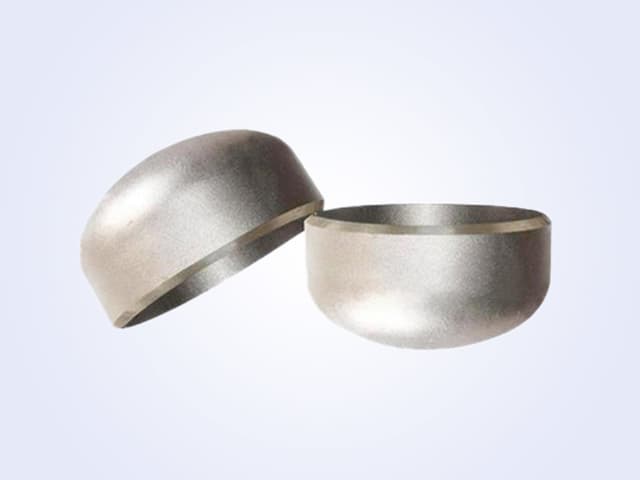
On a trunk line, tees, headers, caps and reducers rarely fail on capability; they fail on what was agreed for verification. Six items are worth settling before an enquiry goes out:
- The full citation: standard number, year and part, down to clause level.
- Material and grade: as agreed in the design documents; the public article gives no grade, and none is inferred here.
- Forming route and heat-treatment condition, written into the specification after checking the standard text.
- Non-destructive testing: method, proportion and acceptance level; the standard gives a range, the contract fixes the value.
- Dimensions: outside diameter, wall thickness, end bevel and length tolerance, checked against drawing and standard.
- Marking and traceability: what is marked, the form of the material certificate, and how heat-treatment records travel with the consignment.
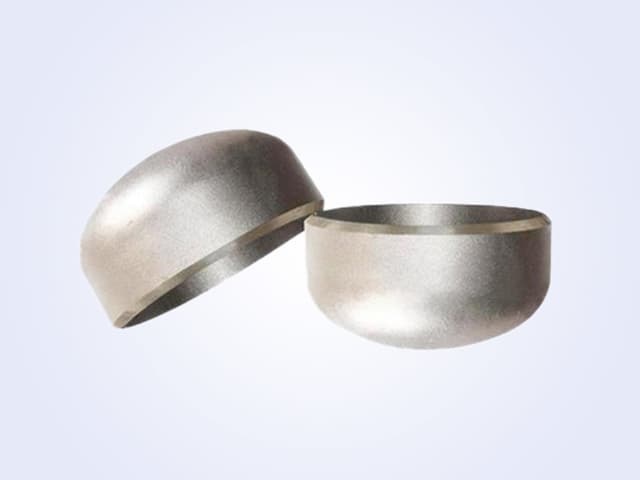
Items 4 and 6 are most often left blank and most likely to become a dispute at acceptance. "Testing to the standard" without a proportion is not an instruction, and a photocopied certificate without heat-treatment records breaks the traceability chain. Both are worth more in writing than a few points of price. Fitting forms are under seamless butt welding pipe fittings; drawings and technical conditions can be sent through the enquiry route.
Sources
Potrebna ponuda za proizvode pomenute u ovom članku?
Pošaljite specifikacije i naš tim za cevovode pod pritiskom odgovoriće u roku od jednog radnog dana.
Pošalji RFQPonuda za 4 sata
Proizvodi pomenuti u članku
Treba vam ponuda? Pošaljite specifikacije, naš tim odgovara u roku od 4 radna sata.
 Luk cevi
 Redukcija
 Redukcija
ASTM A234 WPB/WP11/WP22; A403 WP304/WP316; A420 WPL6; carbon, alloy, stainless
Povezano štivo
 Studije slučaja
Payara and the Prosperity FPSO: A Guyana Offshore Piping Reference
ExxonMobil's Payara development and the Prosperity FPSO mark a major milestone in Guyana's offshore oil production. This case study reviews the project's public facts and outlines what piping procurement professionals should verify when referencing such projects.
 Studije slučaja
Sparta High-Pressure Deepwater Development: A Procurement Risk Reference
Shell's Sparta project in the U.S. Gulf of Mexico exemplifies the extreme demands of high-pressure deepwater developments. This case study outlines procurement risks and verification steps for EPC engineers and buyers, without claiming any involvement by Hebei Haihao Group.
 Studije slučaja
Whale Starts Production: A Standardized Deepwater Design Reference
Shell's Whale project in the U.S. Gulf of Mexico began production in January 2025, showcasing a standardized design approach. This case study explores the implications for EPC engineers and procurement managers, focusing on how standardization can influence piping system procurement and project execution.