Introduction
Forged pipe fittings are critical components in high-pressure and high-temperature piping systems used across oil & gas, petrochemical, power generation, and other industrial sectors. Their dimensional accuracy directly affects assembly fit, system integrity, and long-term reliability. For procurement engineers, understanding how manufacturers control dimensions — and what to verify during sourcing — can prevent costly field rework, leaks, or failures.
This article provides a practical guide to the factors influencing forged fitting dimensions, the standards that govern tolerances, and a checklist to use when evaluating potential suppliers.
Why Dimensional Control Matters
Dimensional deviations in forged fittings can lead to:
- Misalignment during welding or threading, increasing installation time.
- Stress concentrations that reduce fatigue life.
- Leak paths in sealing surfaces (e.g., flange faces).
- Rejection at site inspection, causing project delays and added costs.
For critical applications, even a few tenths of a millimeter out of tolerance can be unacceptable. Therefore, a robust quality management system that ensures repeatable dimensional precision is essential.
Key Factors Affecting Dimensional Accuracy
Manufacturers must control several variables throughout the forging process:
1. Material Selection and Heat Treatment
Different grades (carbon steel, stainless steel, alloy steel) have distinct thermal expansion coefficients and response to heating/cooling. Inconsistent material chemistry or improper heat treatment can cause warping or shrinkage. Always ask for material test certificates (MTCs) confirming chemical and mechanical properties.
2. Forging Process Parameters
Temperature, pressure, and dwell time must be optimized for each geometry. Overheating can cause excessive scale or grain growth, while insufficient heating may result in incomplete die fill. Simulation (FEM) is often used to design the process.
3. Die and Tooling Condition
Dies wear over time, especially on sharp edges and radii. Regular inspection and replacement schedules are critical. High-precision machining of dies (CNC) ensures consistent part geometry.
4. Cooling and Post-Forging Handling
Rapid cooling can introduce residual stresses and distortion. Controlled cooling or annealing may be required. After forging, many fittings undergo machining to achieve final tolerances.
5. Inspection and Measurement Tools
Suppliers should use calibrated instruments: calipers, micrometers, go/no-go gauges, coordinate measuring machines (CMM), and 3D scanners for complex profiles. Frequency of inspection (first article, in-process, final) should be documented.
Relevant Standards and Tolerance Classes
When specifying forged fittings, refer to these international standards:
| Standard | Scope | Dimensional Tolerance |
|---|---|---|
| ASME B16.11 | Forged fittings (socket-weld, threaded) | Wall thickness, center-to-end, thread dimensions |
| ASME B16.5 | Forged flanges | Outside diameter, bolt circle, flange thickness, face finish |
| ASME B16.9 | Factory-made wrought butt-weld fittings | (though not forged, often referenced) |
| MSS SP-79 | Forged fittings – socket weld and threaded | Additional tolerance guidance |
| DIN / EN 10253 | Steel butt-weld fittings | European standards |
| ISO 4144 | Threaded fittings | Thread accuracy |
Always confirm which standard and tolerance class (e.g., "standard" or "special") applies to your order.
Inspection Documents to Request
Before accepting a shipment, require these documents:
- Material Test Certificate (MTC) per EN 10204 3.1 or 3.2.
- Dimensional Inspection Report – a sampling plan (e.g., AQL) with actual measurements.
- Heat Treatment Chart – time-temperature record.
- Positive Material Identification (PMI) report if required.
- Third-party inspection certificate (if specified in contract).
RFQ Checklist for Buyers
When sending an RFQ, include the following details to get accurate quotes and reduce risk:
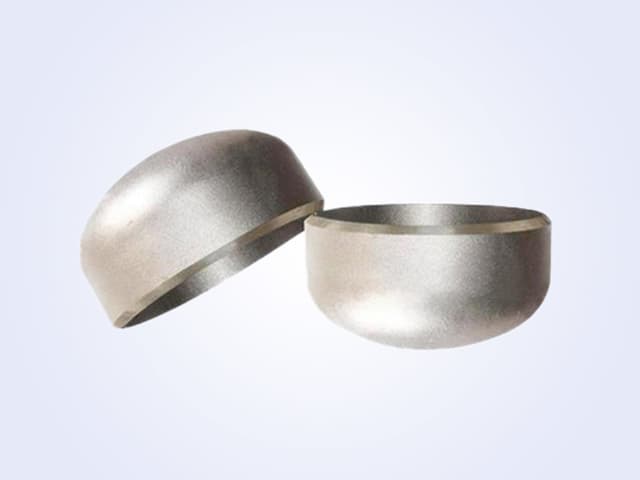
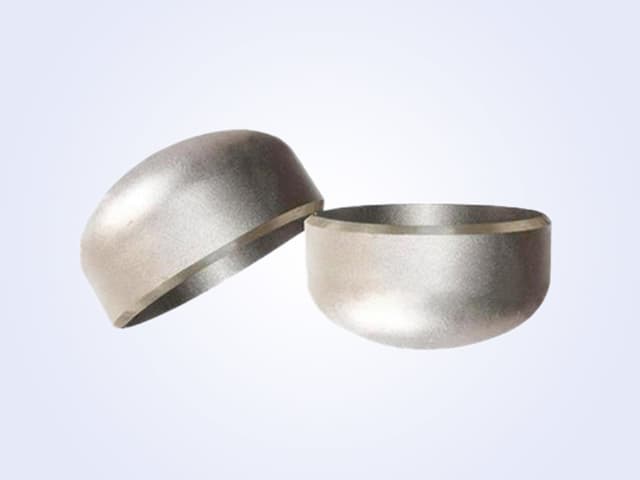
- Fitting type (elbow, tee, cross, coupling, cap, etc.)
- Size and schedule (e.g., 2" Sch 80)
- Material grade (e.g., ASTM A105, A182 F316L)
- End type (socket weld, threaded, butt weld)
- Standard and tolerance class (e.g., ASME B16.11)
- Surface finish (e.g., black oxide, galvanized, passivated)
- Quantity and packaging requirements
- Inspection and documentation requirements (MTC, Dimensional Report, PMI)
- Delivery timeline
Providing this upfront helps suppliers quote accurately and avoid misunderstandings.
Common Quality Risks and How to Mitigate
| Risk | Mitigation |
|---|---|
| Out-of-round or ovality | Verify that supplier uses proper die and perform ring gauge checks. |
| Wall thickness variation | Request wall thickness survey report. |
| Thread inaccuracy (for threaded fittings) | Use thread gauges; require pass/fail certification. |
| Dimensional drift over large batches | Ask for statistical process control (SPC) data. |
| Damage during shipping | Require proper packing (individual wrapping, palletizing). |
What to Send to Suppliers for Accurate Quotation
To get precise pricing and avoid surprises, share the following before quotation:
- Detailed engineering drawing with tolerances.
- Specification sheet listing referenced standards.
- Any special coating or marking requirements.
- Expected order quantity and delivery schedule.
- Sample (if complex geometry) or 3D model.
This enables the manufacturer to evaluate tooling needs, production feasibility, and inspection methods.
Conclusion
Dimensional accuracy in forged pipe fittings is not automatic — it requires disciplined process control, rigorous inspection, and clear communication between buyer and supplier. By understanding the factors that influence dimensions, referencing appropriate standards, and using the RFQ checklist provided, procurement engineers can confidently select manufacturers that deliver consistent quality.
At Hebei Haihao Group, we understand these challenges. Our production facilities are equipped with precision dies, real-time monitoring systems, and a dedicated quality assurance team that inspects every batch. We are ready to support your project with forged fittings that meet or exceed your dimensional requirements.
Request a Quote Today – Send your RFQ with specifications to our sales team, and we will provide a detailed quotation with full inspection documentation.
Need a quote for the products mentioned in this article?
Submit your specs and our pressure piping team will respond within one business day.
Send RFQQuote in 4 hours
Products covered in this article
Sourcing any of these? Send the spec and our pressure-piping desk replies within 4 business hours.
Related reading
 Buyer guide
NPT Threaded Fitting Inspection: B1.20.1 Gauging and RFQ Controls
Learn how to inspect NPT threaded fittings per ASME B1.20.1 and B16.11, including gauging, RFQ inputs, and documentation checks for EPC buyers.
 Buyer guide
ASME B31.1 Replacement Piping Spools: A Component Specification Guide
Specifying replacement piping spools for power plants requires careful alignment with ASME B31.1 and B16.9. This guide covers key procurement checks, RFQ inputs, and inspection points to ensure code compliance and safe operation.
 Buyer guide
Orifice Flange RFQ Checklist: B16.36 Details Buyers Often Miss
ASME B16.36 orifice flanges have unique requirements beyond B16.5. This guide covers scope, procurement checks, inspection points, and common risks to help EPC engineers and buyers specify correctly.