Introduction
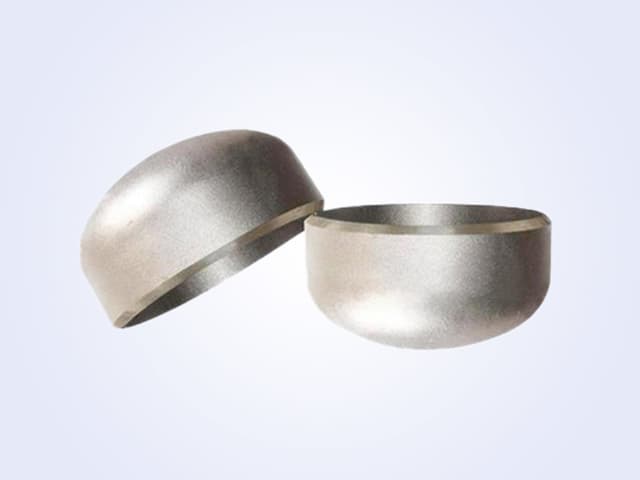
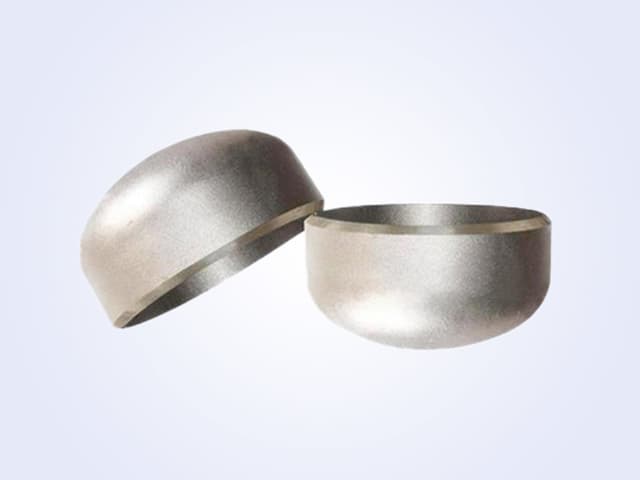
Stainless steel butt-weld fittings are widely used in chemical, petrochemical, food processing, and power generation industries due to their corrosion resistance. However, not all stainless steels perform equally in corrosive environments. This guide helps procurement engineers make informed decisions when selecting and sourcing these components.
Understanding Stainless Steel Grades for Butt-Weld Fittings
The corrosion resistance of stainless steel depends primarily on its chemical composition. Common grades for butt-weld fittings include:
- 304/304L: General-purpose grade with good corrosion resistance in many environments. 304L has lower carbon content to minimize sensitization during welding.
- 316/316L: Contains molybdenum (2-3%) which improves resistance to chlorides and reducing acids. 316L is preferred for welded applications.
- 321: Stabilized with titanium for use in high-temperature service (800-1500°F).
- 347: Stabilized with niobium, similar to 321 but with better creep strength.
For severe corrosive conditions, grades like 904L or duplex stainless steels (e.g., 2205) may be required. Always confirm the environment's pH, chloride concentration, and temperature.
Corrosion Resistance Mechanisms: The Role of Chromium and Molybdenum
Stainless steel resists corrosion through a passive chromium oxide layer. Chromium content (minimum 10.5% in stainless steel) enables this layer to self-repair in the presence of oxygen. Molybdenum in 316/L enhances pitting resistance in chloride-containing media, quantified by the Pitting Resistance Equivalent Number (PREN = %Cr + 3.3%Mo + 16%N).
Welding can disrupt the passive layer and cause sensitization—where chromium carbides form at grain boundaries, depleting chromium locally. To prevent this, use low-carbon grades (L) or stabilized grades (321, 347). Post-weld pickling and passivation restore corrosion resistance.
Key Standards and Specifications for Procurement
When sourcing stainless steel butt-weld fittings, ensure compliance with:
- ASTM A403: Standard specification for wrought austenitic stainless steel piping fittings.
- ASME B16.9: Factory-made wrought butt-welding fittings (dimensions, tolerances).
- ASME B36.10 / B36.19: Pipe wall thickness schedules.
- NACE MR0175 / ISO 15156: For sour service (H₂S environments).
- Material Test Certificates (MTC): Required to verify chemical composition and mechanical properties.
Also consider end-user specifications such as pressure class, temperature range, and additional NDE requirements.
Quality Risks and Inspection Points
Common quality issues and how to mitigate them:
| Risk | Inspection / Mitigation |
|---|---|
| Wrong grade substitution | Positive Material Identification (PMI) on random samples. |
| Dimensional deviations | Verify per ASME B16.9 with calibrated tools. |
| Surface defects (pits, cracks) | Visual inspection and dye penetrant testing. |
| Weld decay (sensitization) | Use low-carbon grade; request intergranular corrosion test (ASTM A262). |
| Incomplete documentation | Require MTC, traceability, and compliance certificates upfront. |
RFQ Checklist for Stainless Steel Butt-Weld Fittings
To receive accurate quotes, include:
- Material grade (e.g., 316L) and product form (elbow, tee, reducer, etc.)
- Nominal size (NPS) and schedule (Sch 10S, Sch 40S, etc.)
- Applicable standard (ASTM A403, ASME B16.9)
- Quantity and unit (pieces or tons)
- Delivery location and incoterm
- Required certifications: MTC, NACE, PMI, etc.
- Surface finish: pickled and passivated, sandblasted, or polished
- Testing requirements: hydrostatic, radiography, or dye penetrant
- End preparation: bevel for butt-weld
What to Send Before Requesting a Quote
To ensure proper selection, provide:
- Piping class specification or isometric drawing
- Service conditions: fluid composition, temperature, pressure
- Corrosion allowance
- Acceptance criteria for surface defects (e.g., ASTM A967 for passivation)
- Required lead time and shipping destination
- Any past failure examples to avoid
Conclusion
Selecting the right stainless steel butt-weld fitting requires understanding the material grade, environmental conditions, and manufacturing standards. A thorough RFQ with clear specifications ensures you receive compliant products.
For reliable stainless steel butt-weld fittings meeting international standards, contact Hebei Haihao Group. Our engineers provide full documentation and quality assurance. Request your quotation today.
Need a quote for the products mentioned in this article?
Submit your specs and our pressure piping team will respond within one business day.
Send RFQQuote in 4 hours
Products covered in this article
Sourcing any of these? Send the spec and our pressure-piping desk replies within 4 business hours.
Related reading
 Buyer guide
NPT Threaded Fitting Inspection: B1.20.1 Gauging and RFQ Controls
Learn how to inspect NPT threaded fittings per ASME B1.20.1 and B16.11, including gauging, RFQ inputs, and documentation checks for EPC buyers.
 Buyer guide
ASME B31.1 Replacement Piping Spools: A Component Specification Guide
Specifying replacement piping spools for power plants requires careful alignment with ASME B31.1 and B16.9. This guide covers key procurement checks, RFQ inputs, and inspection points to ensure code compliance and safe operation.
 Buyer guide
Orifice Flange RFQ Checklist: B16.36 Details Buyers Often Miss
ASME B16.36 orifice flanges have unique requirements beyond B16.5. This guide covers scope, procurement checks, inspection points, and common risks to help EPC engineers and buyers specify correctly.