Liquid penetrant testing (PT) is a nondestructive examination method used on nonporous materials to reveal surface-connected discontinuities. For EPC engineers and procurement managers buying pipe fittings, specifying PT correctly requires more than writing "100% PT" on a datasheet. ASTM E165/E165M and ASTM E1417/E1417M provide the practice framework, but neither defines acceptance criteria, dwell times, or procedure details that apply universally. This article explains what these standards cover, what you must verify, and how to build PT requirements into your RFQ and inspection plan.
What PT Does and Does Not Do
Penetrant testing indicates the presence, location, and to a limited extent, the nature and magnitude of surface-open discontinuities. According to ASTM E165/E165M, PT is effective for detecting cracks, seams, laps, cold shuts, shrinkage, laminations, through leaks, and lack of fusion. It is applicable to in-process, final, and maintenance examinations.
PT is not a volumetric method. It will not detect internal or subsurface flaws that are not connected to the surface. For pipe fittings, that means PT complements rather than replaces methods like ultrasonic testing or radiography. If your product standard or service conditions require volumetric examination, PT alone is insufficient.
ASTM E165 vs E1417
ASTM E165/E165M is the general practice for liquid penetrant testing in industry. It describes procedures for penetrant examination of nonporous metallic materials (ferrous and nonferrous) and certain nonmetal materials such as glazed or fully densified ceramics, some nonporous plastics, and glass. It also serves as a reference for reviewing an organization's PT process, preparing process specifications, and organizing facilities and personnel.
ASTM E1417/E1417M establishes minimum requirements for controlling the application of the liquid penetrant method. It is written so it can be specified on an engineering drawing, specification, or contract. Notably, it replaces MIL-STD-6866 and is intended for nonporous metal and nonmetal components. However, E1417 is not a detailed how-to procedure; it must be supplemented by a detailed written procedure that conforms to its requirements. E165 contains information to help develop those details.
PT for Nonporous Pipe Fittings
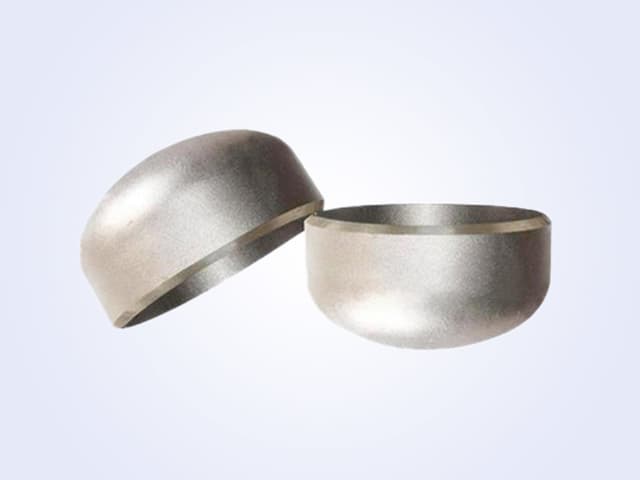
Pipe fittings – elbows, tees, reducers, flanges, and similar components – are commonly manufactured from nonporous metals such as carbon steel, stainless steel, and alloy steels. PT can be applied to finished fittings or to surfaces after machining to detect flaws that could affect pressure integrity or service life.
Because PT only detects surface-connected flaws, inspectors must ensure the surface is clean and free of contaminants that could block penetrant entry. The standards caution that some cleaners, penetrants, and developers can have a deleterious effect on nonmetallic materials such as plastics. If you are examining nonmetallic components, tests should be conducted to confirm that none of the cleaning or examination materials will harm the part.
Temperature is another factor. Elevated temperature can be a concern with thermoplastic components. Penetrant performance also varies with temperature, so the written procedure must define the acceptable temperature range for the examination environment.
Procurement and RFQ Inputs
When you request quotes for fittings that require PT, provide more than a drawing note. Your RFQ should include:
- The specific ASTM practice(s) to be applied, e.g., ASTM E165/E165M and/or ASTM E1417/E1417M.
- The applicable product standard or code that defines acceptance criteria, if one exists. Neither E165 nor E1417 provides acceptance limits. You must reference a separate code, standard, or specific agreement that states what types, sizes, locations, and directions of indications are acceptable.
- What surface condition or manufacturing stage is to be examined (for example, after final machining, before coating).
- Requirements for written procedures, personnel qualification, and process control records.
- Any special temperature, cleaner, or material compatibility requirements.
Add these details to your inquiry form so suppliers can provide a realistic proposal. You can also review the range of fittings and flanges on our products page to understand typical configurations and specify the correct item for your project.
Inspection and Documentation
For inspectors, the key is verifying that the PT process conforms to the specified practice and that the written procedure is followed. Check that:
- The procedure is available and matches the revision of the ASTM standard cited in your purchase order.
- Personnel are qualified and certified as required by your contract or internal requirements.
- Penetrant materials are appropriate for the material being examined and compatible with each other (penetrant, cleaner, developer).
- The surface preparation meets the procedure requirements.
- Examination conditions, including lighting for visible dye or UV-A for fluorescent penetrant, meet the specification.
- Timings such as dwell time and development time follow the written procedure. Do not rely on general "average" values from handbooks; the procedure must be specific.
Documentation should include the procedure ID, material examined, stage of examination, results, and disposition of any indications. If indications are found, they must be interpreted and evaluated against the acceptance criteria you specified. The examining agency cannot decide acceptability on its own; your product standard or agreement defines the limit.
Common Risks
One common risk is treating PT as a universal acceptance test. Because E165 and E1417 deliberately leave acceptance criteria open, a supplier may perform PT and certify compliance without actually judging whether a linear indication is acceptable. The buyer must establish and communicate the acceptance criteria.
Another risk is inadequate surface preparation. PT cannot detect flaws hidden by coatings, grease, scale, or machining debris. If the fitting arrives at inspection with excessive contamination, the examiner may need to repeat cleaning, which can delay schedule and cost.
A third risk is using PT for materials that are actually porous or absorbent. PT is only effective on nonporous surfaces. For castings with porous surfaces, other methods may be required. Confirm the material's nonporous nature with the supplier before specifying PT.
Finally, document version control matters. ASTM standards are updated periodically. Your purchase order should cite the specific edition or year if your project requires it. The supplier must use the same revision during inspection and provide evidence of that procedure's qualification.
Sources
Butuh penawaran untuk produk yang disebutkan dalam artikel ini?
Kirim spesifikasi Anda dan tim perpipaan tekanan kami akan merespons dalam satu hari kerja.
Kirim RFQPenawaran 4 jam
Produk yang dibahas di artikel ini
Butuh penawaran? Kirim spesifikasi Anda dan tim perpipaan kami merespons dalam 4 jam kerja.
 Reducer
 Reducer
ASTM A234 WPB/WP11/WP22; A403 WP304/WP316; A420 WPL6; carbon, alloy, stainless
 Reducer
ASTM A234 WPB/WP11/WP22; A403 WP304/WP316; A420 WPL6; carbon, alloy, stainless
Bacaan terkait
 Teknis
Magnetic Particle Examination of Steel Forgings: Buyer's Guide
How ASTM A275/A275M and E709 govern magnetic particle examination of steel forgings, what to specify, and what to verify with your supplier.
 Teknis
Radiographic Technique for Welded Fittings and Castings: E94 vs E1030
Selecting the correct radiographic examination standard matters: ASTM E94/E94M is a general guide for film radiography, while ASTM E1030/E1030M is the casting-specific practice. Know the difference and what to verify before you specify.
TeknisUltrasonic Examination of Steel Forgings for Fittings and Flanges
ASTM A388/A388M and ASTM E114 are key standards for ultrasonic examination of steel forgings. Learn what they cover, why acceptance criteria must be stated in the order, and what procurement engineers must verify.