DISCLAIMER: Hebei Haihao Group does not claim participation in this project. This case study is based solely on public information and is provided for industry reference.
Introduction
Shell's Sparta development, located in the U.S. Gulf of Mexico, is a high-pressure deepwater project that pushes the boundaries of offshore engineering. According to Shell's official story, Sparta represents a significant step in unlocking energy resources that were once considered out of reach. For procurement professionals in the piping industry, such projects highlight the critical importance of understanding extreme service conditions, material selection, and rigorous quality assurance. This article serves as a reference for EPC engineers, procurement managers, and inspectors, focusing on the procurement risks and verification steps relevant to high-pressure deepwater applications. It is not a project profile but a guide to what buyers must consider when sourcing components for similar demanding environments.
Understanding the Sparta Context
Shell's deepwater overview describes the company's approach to offshore development, emphasizing the technical challenges and innovations required. Sparta, as a high-pressure development, likely involves reservoirs with pressures that exceed conventional equipment ratings. While specific pressure and production figures are not included here—buyers must verify the latest official updates—the project's nature underscores the need for components that can withstand extreme pressures, temperatures, and corrosive environments. For piping systems, this means flanges, fittings, and prefabricated assemblies must meet stringent standards and undergo thorough inspection.
Procurement Risks in High-Pressure Deepwater Projects
High-pressure deepwater projects present unique procurement risks that buyers must manage:
- Material Integrity: Components must be made from materials with proven performance under high pressure and potential sour service. Buyers should specify materials like ASTM A105 for flanges or A694 for high-pressure applications, but must verify that the chosen material meets the project's specific requirements.
- Traceability and Documentation: Full material traceability is essential. Buyers should require EN 10204 3.1 or 3.2 certificates, ensuring that the mill test certificates are reviewed for chemical composition and mechanical properties.
- Quality Assurance: Third-party inspection is often mandatory. Buyers should engage reputable inspection agencies to perform dimensional checks, pressure tests, and non-destructive testing (NDT) as per project specifications.
- Supply Chain Reliability: Given the remote location and harsh environment, any delay or failure can have severe consequences. Buyers must assess the manufacturer's capability and track record.
RFQ Inputs for High-Pressure Components
When preparing a Request for Quotation (RFQ) for components for high-pressure deepwater projects, buyers should include:
- Service Conditions: Clearly state design pressure, temperature, and fluid composition (including H2S and CO2 content).
- Standards and Specifications: Reference applicable standards such as ASME B16.5 for flanges, ASME B16.9 for fittings, and material standards like ASTM A105 or A182.
- Testing Requirements: Specify required NDT methods (e.g., ultrasonic, radiography) and acceptance criteria.
- Documentation: Require MTCs, heat treatment charts, and any additional certifications.
- Marking and Packaging: Ensure compliance with MSS SP-25 for marking and ISPM-15 for wood packaging.
Inspection and Documentation Points
For high-pressure applications, inspection is non-negotiable. Key points include:
- Dimensional Inspection: Verify critical dimensions against ASME B16.5 or B16.9 tolerances.
- Material Verification: Perform PMI (Positive Material Identification) to confirm alloy composition.
- Hydrostatic Testing: If required, conduct pressure tests per ASME B31.3.
- Hardness Testing: Ensure hardness values are within limits, especially for sour service per NACE MR0175.
- Visual and Surface Inspection: Check for defects, cracks, or improper surface finish.
Common Risks and Mitigation Strategies
- Incorrect Material Grade: Mitigate by requiring PMI and reviewing MTCs.
- Inadequate Traceability: Insist on full traceability from melt to final product.
- Poor Weld Quality: For prefabricated piping, ensure welders are qualified and WPS/PQR are approved.
- Delayed Delivery: Build buffer time into the schedule and consider multiple suppliers.
How Hebei Haihao Group Can Support
While Hebei Haihao Group does not claim involvement in Sparta, the company offers products and services relevant to high-pressure projects. For example, their forged flanges and nonstandard forgings can be customized to meet specific pressure and material requirements. Additionally, their prefabricated piping and installation services provide ready-to-install assemblies, reducing on-site work and potential errors. Buyers should engage with the manufacturer early to discuss technical requirements and ensure capabilities align with project needs.
Conclusion
Sparta serves as a reminder of the extreme conditions in high-pressure deepwater developments. For procurement professionals, the key takeaway is the need for meticulous specification, rigorous inspection, and robust documentation. By following the procurement checks and verification steps outlined here, buyers can mitigate risks and ensure the integrity of their piping systems. Always verify the latest project details from official sources and consult with manufacturers to confirm their capabilities.
Sources
Butuh penawaran untuk produk yang disebutkan dalam artikel ini?
Kirim spesifikasi Anda dan tim perpipaan tekanan kami akan merespons dalam satu hari kerja.
Kirim RFQPenawaran 4 jam
Produk yang dibahas di artikel ini
Butuh penawaran? Kirim spesifikasi Anda dan tim perpipaan kami merespons dalam 4 jam kerja.
 Flensa
 Flensa
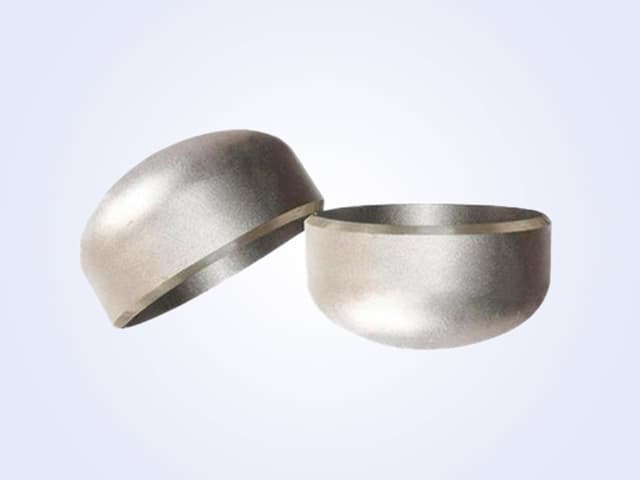 Flensa
ASTM A105 / A182 F11/F22/F304/F316; GB/T carbon, alloy, stainless steel
Bacaan terkait
 Studi kasus
Whale Starts Production: A Standardized Deepwater Design Reference
Shell's Whale project in the U.S. Gulf of Mexico began production in January 2025, showcasing a standardized design approach. This case study explores the implications for EPC engineers and procurement managers, focusing on how standardization can influence piping system procurement and project execution.
 Studi kasus
LNG Canada First Cargo: A Source-Based Cryogenic Piping Reference
Shell announced the first cargo from LNG Canada in June 2025. This reference outlines what EPC buyers can learn about cryogenic piping procurement, with a disclaimer that Hebei Haihao Group has no project involvement.
 Studi kasus
Johan Castberg at Plateau: A Barents Sea Piping Reliability Reference
Equinor's Johan Castberg FPSO reached peak production in June 2025, three months after startup. This case study examines the project's scale and what it implies for cold-region piping procurement.